How to Choose the Right Corrugated Baler Machine
Corrugated packaging is essential to modern shipping, storage, manufacturing, retail, and distribution. It protects products throughout the supply chain, but once those boxes, sheets, and packaging materials have served their purpose, they can quickly consume valuable space and create unnecessary handling challenges.
A corrugated baler machine compresses this bulky material into dense, manageable bales that are easier to store, transport, and recycle. Choosing the right corrugated baling machine depends on the type of corrugated material being processed, how much is generated, how it moves through the facility, and the level of automation required.
What Does Corrugated Mean?
Corrugated is often used interchangeably with cardboard, but the two materials are not exactly the same.
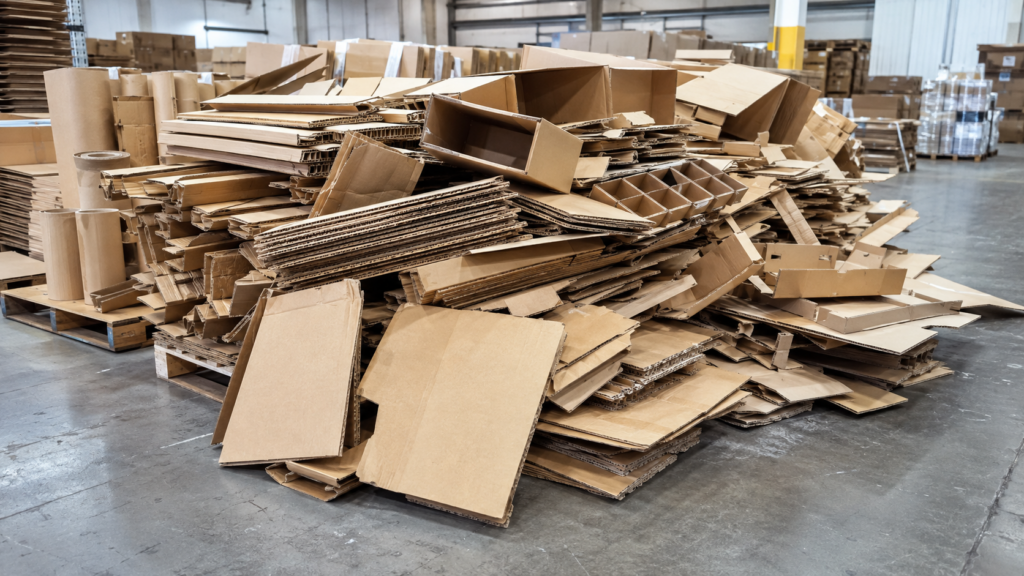 Corrugated material is made with one or more fluted paper layers placed between flat linerboard sheets. The fluted center provides strength, rigidity, and cushioning while keeping the packaging relatively lightweight. This layered construction makes corrugated packaging especially useful for shipping boxes, product protection, retail displays, and industrial packaging.
Single wall corrugated has one fluted layer between two linerboard sheets and is commonly used for standard shipping boxes. Double wall corrugated contains two fluted layers, providing additional strength for heavier products and more demanding shipping conditions. Triple wall corrugated uses three fluted layers and is often strong enough to replace wood packaging in heavy industrial applications.
Corrugated waste can include much more than empty boxes. Manufacturers, distribution centers, and packaging companies may also generate sheets, trays, dividers, edge protectors, cores, box cuttings, and other production scraps. Once used, recyclable corrugated cardboard is commonly classified as old corrugated containers, or OCC.
Where Is Corrugated Material Used?
Corrugated packaging is found throughout nearly every industry. Retail stores, grocery operations, manufacturers, warehouses, fulfillment centers, food processors, printers, recycling facilities, and distribution centers all generate it in different forms and quantities.
The way corrugated material is generated matters when selecting a baler. A retail store may have employees breaking down and loading boxes periodically throughout the day. A large distribution center may generate a constant stream of full size boxes, sheets, and packaging scraps that need to move directly from the work area into the recycling process.
Both operations need a corrugated baler machine, but they probably do not need the same one.
Why Use a Corrugated Baler Machine?
Loose corrugated cardboard consumes a tremendous amount of space relative to its weight. Empty boxes can quickly fill stockrooms, production areas, dumpsters, and trailers. They can also interfere with employee movement, material handling, and general workplace organization.
A properly selected corrugated baler machine can help an operation:
• Reduce storage requirements and hauling frequency
• Improve housekeeping and workplace safety
• Decrease the manual handling of loose boxes
• Produce consistent bales that are easier to store and transport
• Improve the marketability of clean OCC
• Keep recyclable fiber out of the waste stream
The quality of the material remains important. OCC should be kept clean, dry, and separated from food residue, oils, plastic film, foam, and other contaminants. Wax coated or heavily contaminated packaging may require separate handling based on the requirements of the local recycler or commodity buyer.
When Is a Vertical Corrugated Baler the Right Choice?
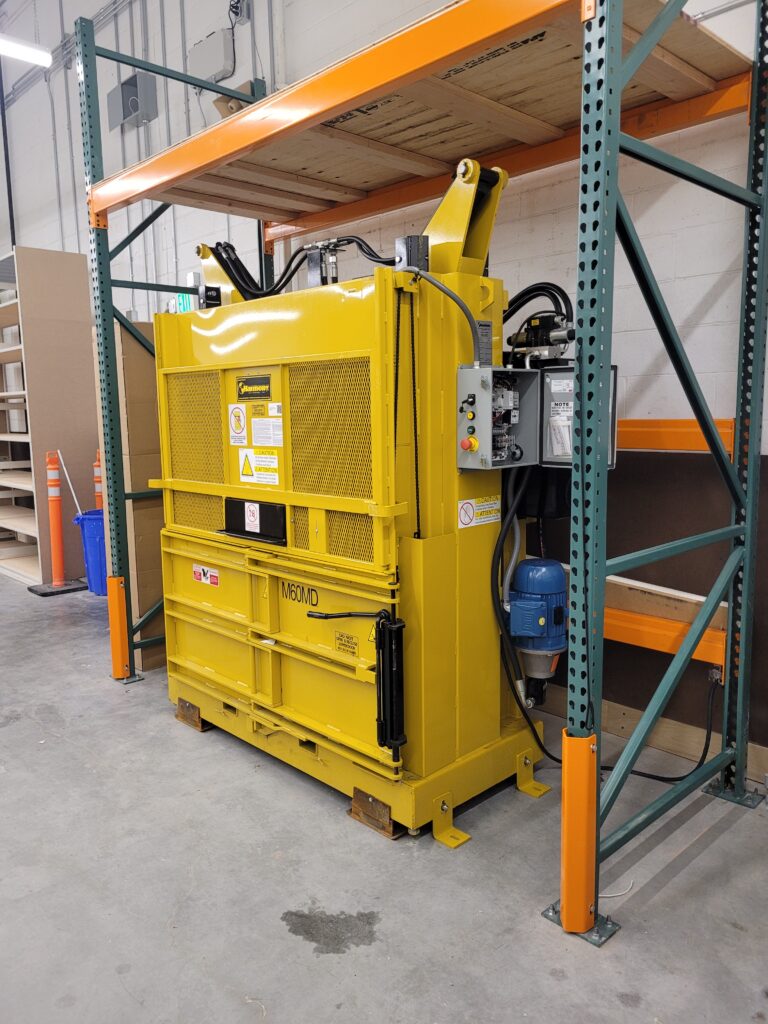 A vertical baler compresses corrugated material from the top down. These machines are widely used by retailers, grocery stores, manufacturers, warehouses, and other businesses generating low to moderate volumes of cardboard.
Most vertical balers require an operator to load the chamber, initiate the compression cycle, tie the completed bale, and remove it from the machine. Their relatively small footprint makes them a practical option for stockrooms and facilities where space is limited.
Harmony manufactures vertical corrugated balers in several sizes. A smaller operation may benefit from a mobile or compact model, while a larger retailer or manufacturer may need a 60 inch machine that produces dense, mill size OCC bales.
The M60MD, for example, can produce OCC bales weighing up to 800 pounds while fitting beneath a standard eight foot ceiling. The M60CB is an economical cardboard baler capable of producing bales weighing up to 1,000 pounds. For operations handling especially large boxes, the M72HD features an extra large feed opening that reduces the need to break down material before loading.
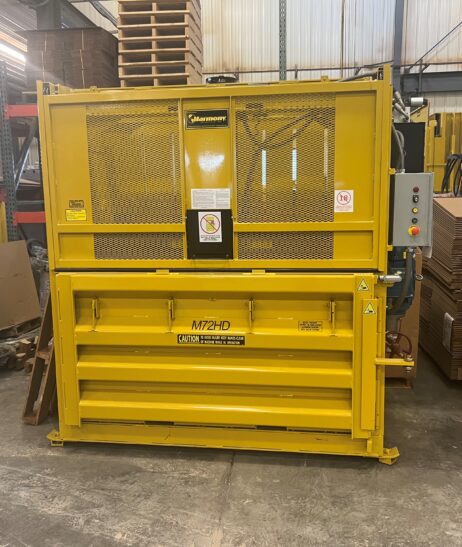 Vertical balers are efficient and economical when corrugated material can be manually loaded in manageable quantities. However, they generally do not have a shear bar that cuts excess material extending above the chamber opening. Large sheets and boxes must be properly positioned to prevent them from bridging across or jamming the feed opening.
Even conveyor fed automatic vertical balers may not be the best solution for a continuous stream of large or irregular pieces of corrugated material. This is an important distinction when comparing vertical and horizontal baling systems.
When Is a Horizontal Corrugated Baler the Better Solution?
A horizontal baler uses a hydraulic ram to push material through a horizontal compression chamber. These machines generally offer larger feed openings, greater processing capacity, and more automated loading options than traditional vertical balers.
Horizontal corrugated balers are well suited for facilities generating moderate to extremely high volumes of OCC. They can be integrated into the facility’s material flow and loaded manually or through a conveyor, cart tipper, hopper, gravity system, or pneumatic system.
This flexibility can significantly reduce the amount of time employees spend breaking down, transporting, and manually loading cardboard. Material can move more directly from the production, packaging, or distribution process into the baler.
Horizontal balers also produce large, dense, and consistent bales that are easier to stack, transport, and market. Depending on the model, bales may be tied manually or automatically.
Why Is Shear Bar Technology Important?
Corrugated cardboard is bulky, rigid, and frequently larger than the opening of a baler’s compression chamber. Long sheets or oversized boxes may extend above the chamber as the ram begins its cycle. Without the correct equipment, that excess material can bridge across the opening, interrupt the cycle, or create a jam.
Advanced shear bar technology allows a horizontal corrugated baler machine to cut through excess material as the ram moves through its compression cycle. This reduces or eliminates the need to flatten, cut, or otherwise precondition many types of corrugated material before loading.
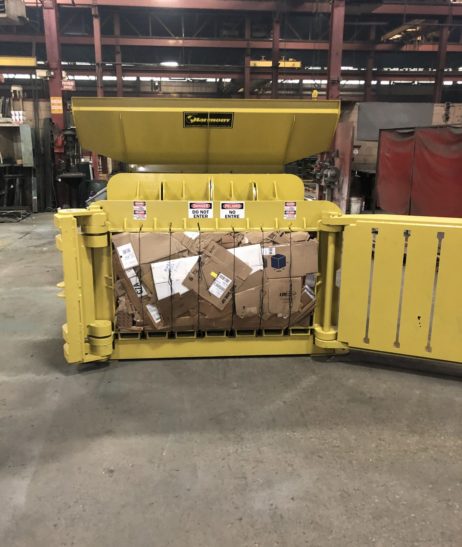 Harmony’s HM-60 Closed Door Manual Tie Horizontal Baler uses shear blade technology to reduce bridging and jamming while supporting automatic cycling. It can be configured for loading with a conveyor, hopper, tipper, or other material handling system. The HM-60 produces dense OCC bales weighing approximately 1,500 pounds.
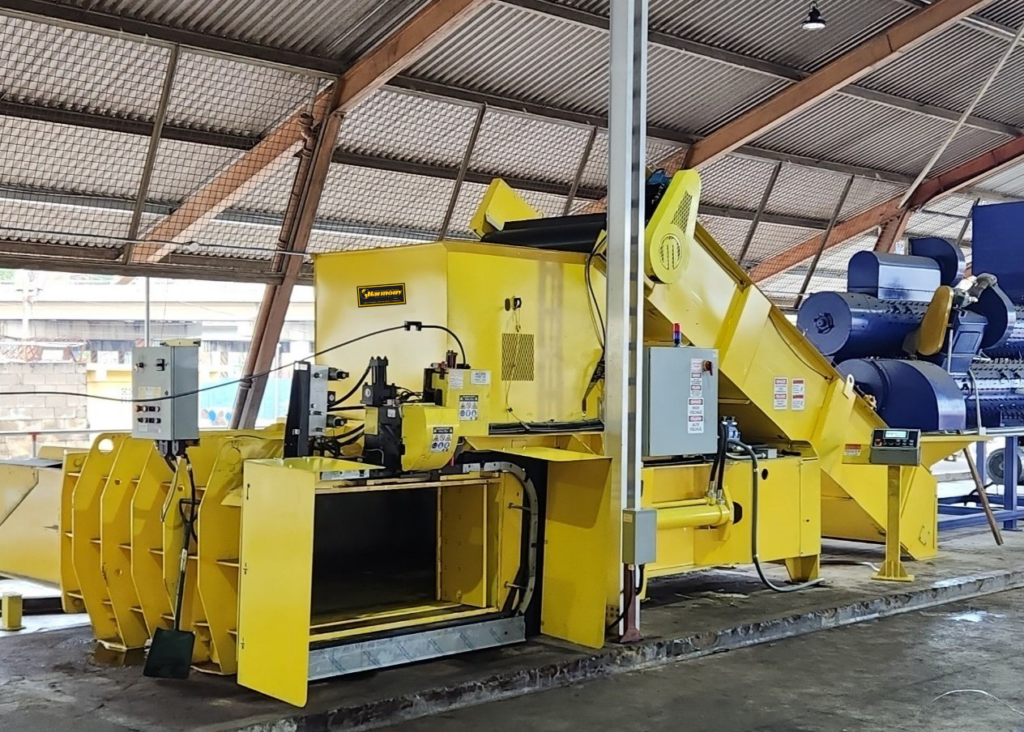 For larger and more demanding applications, Harmony’s HM-2R185 Two Ram Horizontal Baler has a built in shear that eliminates the need to precondition corrugated material. It is engineered for high volume operations and can produce OCC bales weighing approximately 1,500 to 1,600 pounds.
The HM-2R185 also completely clears its chamber after each bale. This allows an operation to switch between recyclable materials without stopping production or contaminating the next bale.
In both applications, shear technology helps maintain consistent material flow while reducing preparation, jamming, labor requirements, and unnecessary downtime.
Vertical or Horizontal: Which Corrugated Baler Machine Do You Need?
Volume is an important consideration, but it should never be the only factor used to select a corrugated baler machine. The size and shape of the material can be just as important as its total weight.
An equipment evaluation should consider:
• Daily and peak corrugated volume
• Box and sheet dimensions
• Available space and ceiling height
• Current labor and material handling practices
• Required bale size and weight
• Loading method and desired level of automation
• Recycler or commodity buyer requirements
• Electrical service and facility layout
• Anticipated growth
A vertical baler is often the most economical solution for a business that generates low to moderate volumes and can load its corrugated material manually. A horizontal corrugated baler becomes more attractive when an operation needs greater throughput, larger bales, automated feeding, less material preparation, or fewer production interruptions.
The goal is not simply to purchase a larger machine. It is to match the baler and feeding system to the way corrugated material actually moves through the facility.
Find the Right Corrugated Baler Machine
Every corrugated recycling application is different. Material volume matters, but so do box dimensions, labor availability, facility layout, feeding requirements, bale specifications, and long term recycling goals.
Harmony Enterprises manufactures a complete line of vertical and horizontal corrugated baler machines. Our team can evaluate your material stream, available space, current recycling costs, and operational requirements to help identify the right long lasting solution.
Call Harmony Enterprises at 507-886-6666 or contact us online to request a free quote or site review today!