What Does a Commercial Trash Compactor Cost?
If you are researching a commercial trash compactor, one of the first questions is probably simple: how much does a trash compactor cost?
The answer depends on what you need the machine to do. Commercial compactor pricing can vary based on the size and style of the machine, the type and volume of waste being compacted, whether the unit is installed indoors or outdoors, how the material is loaded, the container size, freight, installation, and any additional features that are part of the system.
That is why the best place to start is not necessarily with a price tag. It is with the waste problem you are trying to solve.
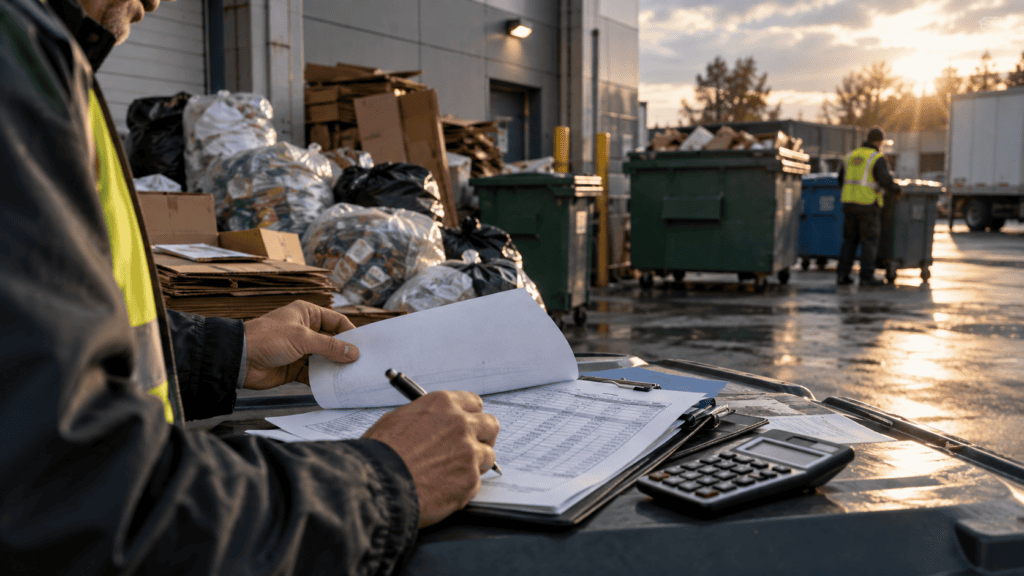 Two companies can both be shopping for a trash compactor and need completely different equipment. A restaurant may be trying to reduce the number of bags employees carry to an outside dumpster. A hospital may want to contain waste inside the building and improve housekeeping. A distribution center may be trying to reduce the number of waste hauls it pays for every month. Those are different problems, so they require different solutions.
Size and Capacity Affect Compactor Price
One of the biggest pricing factors is capacity. Larger compactors generally require more steel, larger hydraulic components, stronger structural frames, and greater ram force. They are also designed to process more material and may be paired with larger containers.
A facility generating a few bags of waste per hour does not need the same machine as a warehouse filling multiple dumpsters each week. Choosing the correct capacity matters because oversizing a compactor can increase the upfront investment unnecessarily, while undersizing one can lead to excessive cycling, more labor, and poor overall performance.
The goal is to match the machine to the actual waste volume rather than simply buying the largest system available.
Indoor and Outdoor Compactors Are Priced Differently
Where the compactor will be installed also affects price. Outdoor stationary and self-contained compactors are often built for larger waste volumes and may require roll-off containers, concrete pads, electrical service, chutes, hoppers, or loading decks.
Indoor compactors are usually smaller, but the application may create other requirements. A hospital, restaurant, institutional kitchen, airport, or school may need equipment that resists moisture, is easy to clean, fits within a limited floor area, and can be operated close to the point where waste is generated. These types of machines are designed for facilities where labor savings, sanitation, and housekeeping can be just as important as hauling reduction.
Waste Type Can Change the Equipment You Need
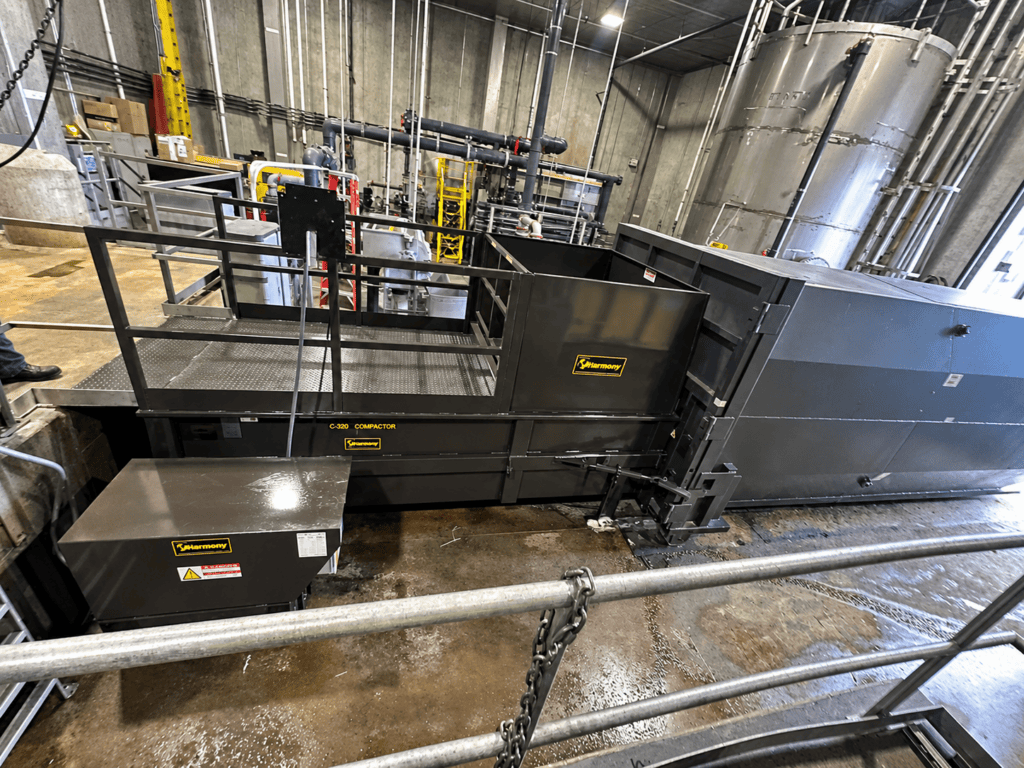 The type of waste being compacted is another major pricing factor. Dry waste such as packaging, paper, and general refuse can often be handled with a stationary compactor. Wet waste may require a self-contained system that keeps liquids inside the compactor and container.
Food waste, healthcare waste streams, and other moisture-heavy materials may also require equipment that is easier to clean and more resistant to corrosion.
In the right application, stainless steel is not simply an upgrade. It is part of making sure the equipment is appropriate for the environment where it will be used. In facilities where moisture, sanitation, frequent cleaning, and corrosion resistance matter, the added cost can be justified by durability and day-to-day usability.
Loading Configuration Can Add to the Cost
How waste gets into the compactor can significantly affect the final price. Some compactors are hand-fed directly from floor level. Others are loaded from a dock, chute, hopper, elevated deck, or multi-story waste system.
A standard ground-fed compactor may require very little additional equipment. A system designed to accept waste from multiple floors or from a loading dock can require custom chutes, hoppers, access platforms, or structural modifications.
Those added components can materially affect the total project cost. This is why an accurate commercial compactor quote should consider the entire installation, not just the base machine.
Container Size and Hauling Setup Matter Too
The compactor is only one part of the waste system. For stationary and self-contained compactors, container size and hauling method can affect both upfront and long-term costs.
A larger container may cost more initially, but it can also reduce the number of hauls needed each month. That tradeoff is important because a lower-priced system that requires frequent pickups may end up costing more over time than a larger system that reduces hauling frequency.
For many operations, hauling savings are one of the most important reasons to invest in compaction equipment in the first place.
Stainless Steel Construction Can Increase Price but Add Long-Term Value
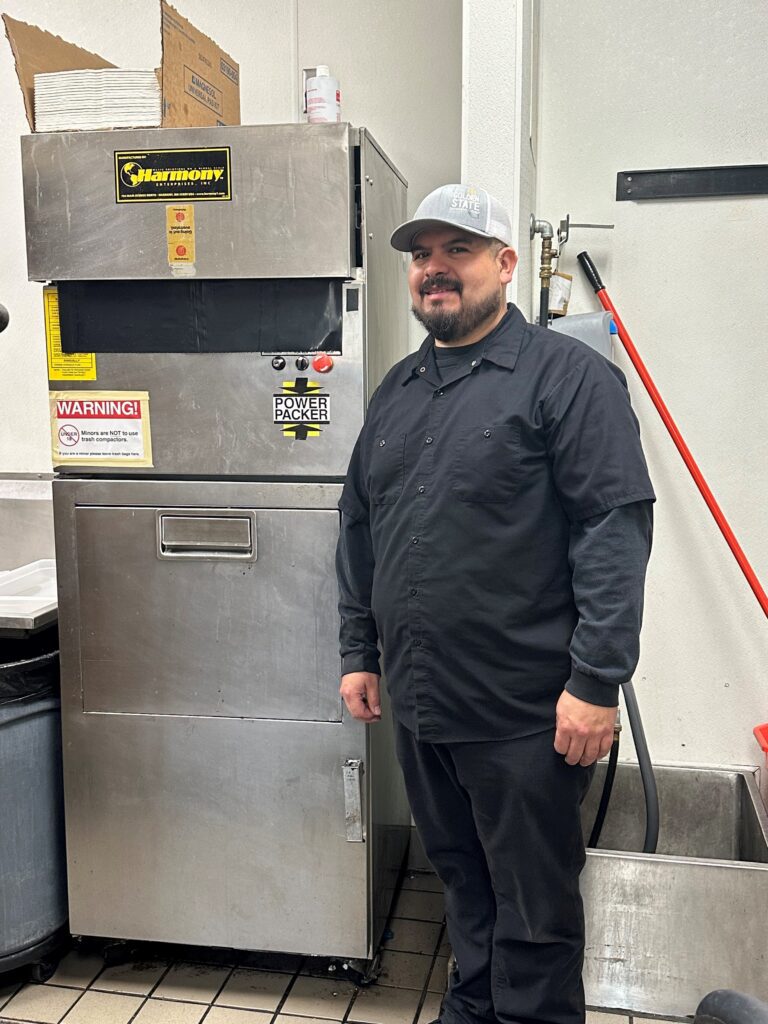 Stainless steel is a good example of a feature that can increase upfront cost but make sense over the life of the equipment.
Harmony’s 300SS, 450SS, and 700SS indoor compactors are designed for environments where moisture, sanitation, and frequent cleaning are concerns. These machines can be especially useful in restaurants, hospitals, institutional kitchens, schools, foodservice facilities, and other indoor operations where corrosion resistance and cleanability are important.
The 300SS is designed for lower-volume applications and limited floor space, while the 450SS provides additional capacity for facilities generating more waste. The 700SS is the largest model in the stainless steel line and is intended for higher-volume indoor waste streams.
All three are designed to provide substantial volume reduction while allowing waste to be compacted close to where it is generated.
Optional Features and Monitoring Affect Pricing
Controls, accessories, and monitoring options can also affect commercial compactor price. Features such as casters, drip pans, alarms, safety upgrades, chutes, hoppers, decks, and monitoring technology can all add to the initial cost.
Harmony’s Insite monitoring technology, for example, can send alerts when equipment needs to be emptied or serviced. That adds another level of functionality, but it can also reduce unnecessary equipment checks and help employees respond when attention is actually needed.
Whether those features make sense depends on the operation. A busy hospital or airport may value remote monitoring differently than a small warehouse with a compactor located directly outside the loading dock.
Freight, Installation, and Electrical Work Are Part of the Real Cost
A quoted machine price is not always the same as the installed project cost. Freight distance, equipment weight, site access, electrical service, concrete work, anchoring, crane or rigging requirements, and startup support can all affect the final number.
That is especially important with larger commercial and industrial compactors. A realistic budget should include the complete installation rather than focusing only on the price of the machine itself.
The Lowest Compactor Price Is Not Always the Lowest Cost
Once you look at all of these factors, it becomes clear why comparing compactors only by purchase price can be misleading.
A lower-priced machine that does not match the waste stream or operating environment may cost more over time. The real financial impact comes from what the compactor changes in your operation.
If employees are spending hours every week moving trash, changing bags, walking to dumpsters, or managing overflowing containers, those labor costs matter. If you are paying for frequent waste pickups because containers are filling with loose material, those hauling costs matter too.
A properly selected compactor can help reduce both.
That is why the better question is often not, “How much does the compactor cost?” It is, “How much could the right compactor save us every month?”
Calculate Your Compactor ROI
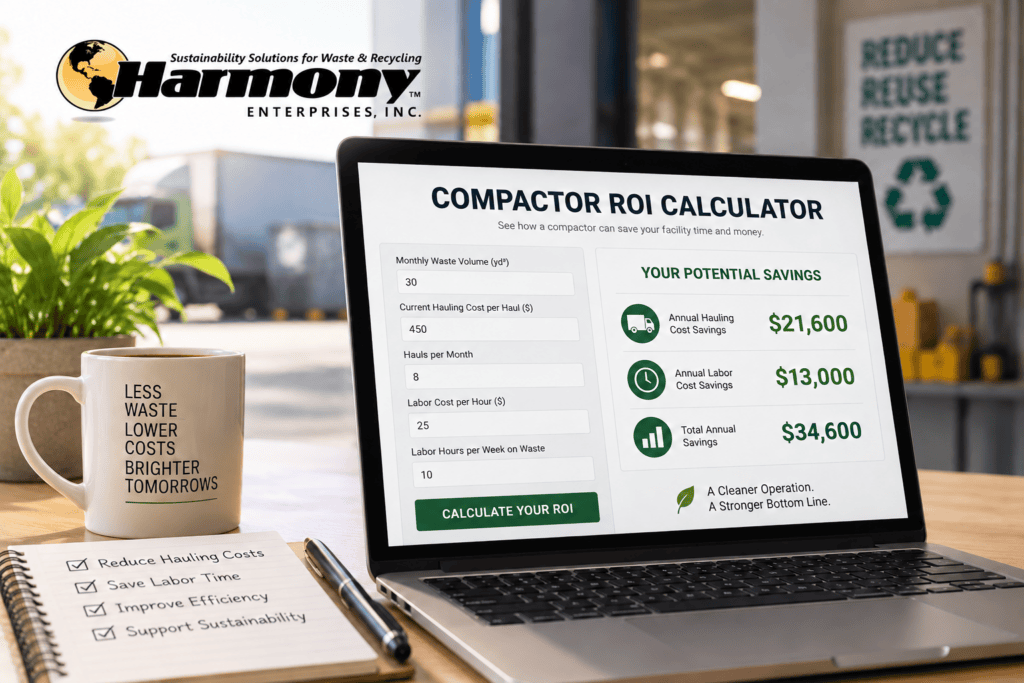 Harmony created its Compactor ROI Calculator to help answer that question.
The calculator allows you to enter your current number of waste hauls, expected future hauls, cost per haul, weekly labor hours saved, employee hourly rate, and estimated compactor cost. It then calculates estimated monthly hauling savings, labor savings, total monthly benefit, annual financial impact, and estimated payback period.
For many businesses, those numbers provide a much clearer picture of the investment than purchase price alone.
Calculate your potential savings with Harmony’s Compactor ROI Calculator:
https://harmony1.com/compactor-roi-calculator/
Which Type of Harmony Compactor Might Fit Your Application?
Once the pricing factors are clear, it becomes easier to understand which type of machine may make sense.
Harmony manufactures indoor, stainless steel, stationary, vertical, and self-contained compactors for a wide variety of applications. A smaller indoor operation may be better suited to a SmartPack or 300SS, while a higher-volume indoor application may require a 450SS or 700SS.
A distribution center may need a C200 or C300 stationary compactor, while a grocery, foodservice, or wet-waste application may be better served by a self-contained system. Facilities with limited exterior space may benefit from a vertical compactor.
The important point is that the machine should be selected based on the application, not simply on the lowest purchase price.
Get an Accurate Commercial Compactor Price
The most accurate way to price a commercial trash compactor is to look at the entire waste-handling process.
That includes how much waste you generate, what type of material it is, where the equipment will be installed, how employees will load it, what container is needed, how often you are currently hauling waste, and what those hauls cost.
Once those factors are understood, Harmony can recommend the right equipment and provide a quote based on the actual application.
That is a much better way to evaluate compactor price than comparing machines by size alone.
Harmony Enterprises manufactures commercial trash compactors for a wide range of indoor and outdoor applications. Start by using the Compactor ROI Calculator, then contact our team for a free equipment recommendation and quote.
Call (507) 886-6666 or fill out this simple form to learn more today!