Textile Balers: The Complete Guide to Textile Recycling & Textile Waste Management
Modern Textile Recycling Starts with Smarter Material Handling
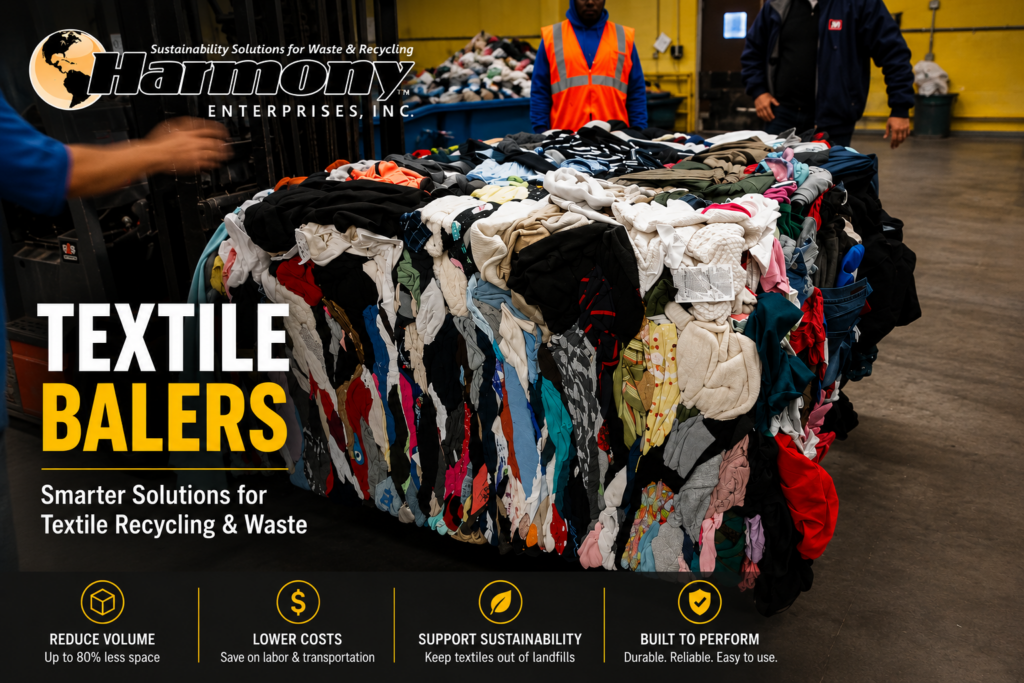 The global textile industry is changing rapidly. As manufacturers, retailers, municipalities, charities, recyclers, and distribution centers work toward sustainability goals, textile recycling has become one of the fastest-growing segments of the circular economy.
Efficient textile recycling starts with collecting, sorting, and compressing textile waste into dense, transportable bales.
Whether your operation handles used clothing, upholstery, industrial fabrics, carpet, manufacturing offcuts, nonwoven materials, or mixed textile fibers, the right textile baler can dramatically reduce storage space, improve workplace safety, lower transportation costs, and maximize recycling value.
At Harmony Enterprises, we design heavy-duty textile balers engineered for today’s growing textile recycling industry!
Why Textile Recycling Matters More Than Ever
The world produces well over 100 million metric tons of textile waste every year, yet only a small percentage is recycled into new textile products. Most discarded textiles still end up in landfills or are incinerated despite containing valuable reusable fibers. Growing regulations, corporate sustainability initiatives, and consumer demand for circular manufacturing are accelerating investment in textile recycling infrastructure worldwide.
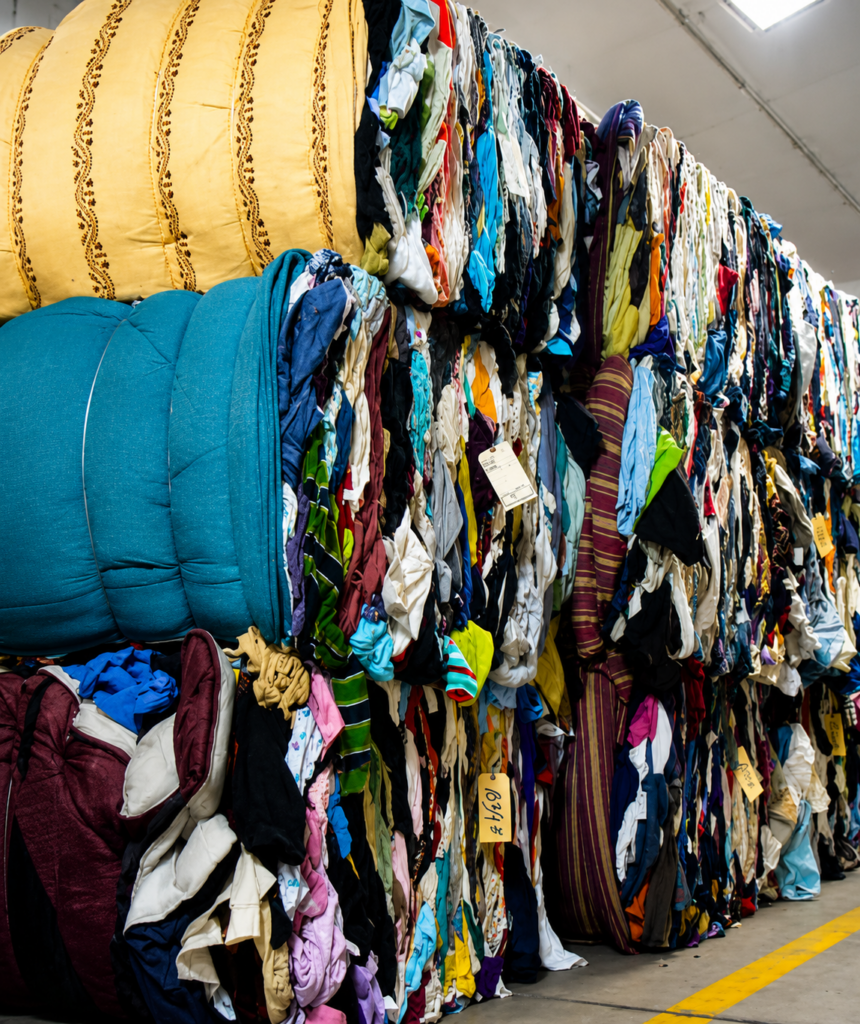 Textile waste includes apparel, shoes, bedding, towels, curtains, upholstery, furniture fabrics, carpet, automotive textiles, industrial fabrics, geotextiles, cotton, polyester, wool, nylon, acrylic, denim, felt, nonwoven materials, fiber manufacturing scrap, fabric roll ends, and production trim waste. Many of these materials retain significant recycling value when properly sorted and baled.
What Is a Textile Baler?
A textile baler is a hydraulic recycling machine that compresses loose textiles into dense, uniform bales. Rather than storing large volumes of bulky materials, recyclers can create compact bales that are easier to stack, store, ship, inventory, sell, and process. Because textiles naturally contain a great deal of trapped air, baling can reduce storage volume by more than 80 percent.
Industries That Use Textile Balers
Modern textile balers are used by textile recycling facilities, apparel manufacturers, furniture manufacturers, carpet and flooring producers, industrial textile manufacturers, automotive suppliers, charitable organizations, municipal recycling programs, and distribution centers handling returned or obsolete inventory.
What Can Be Recycled?
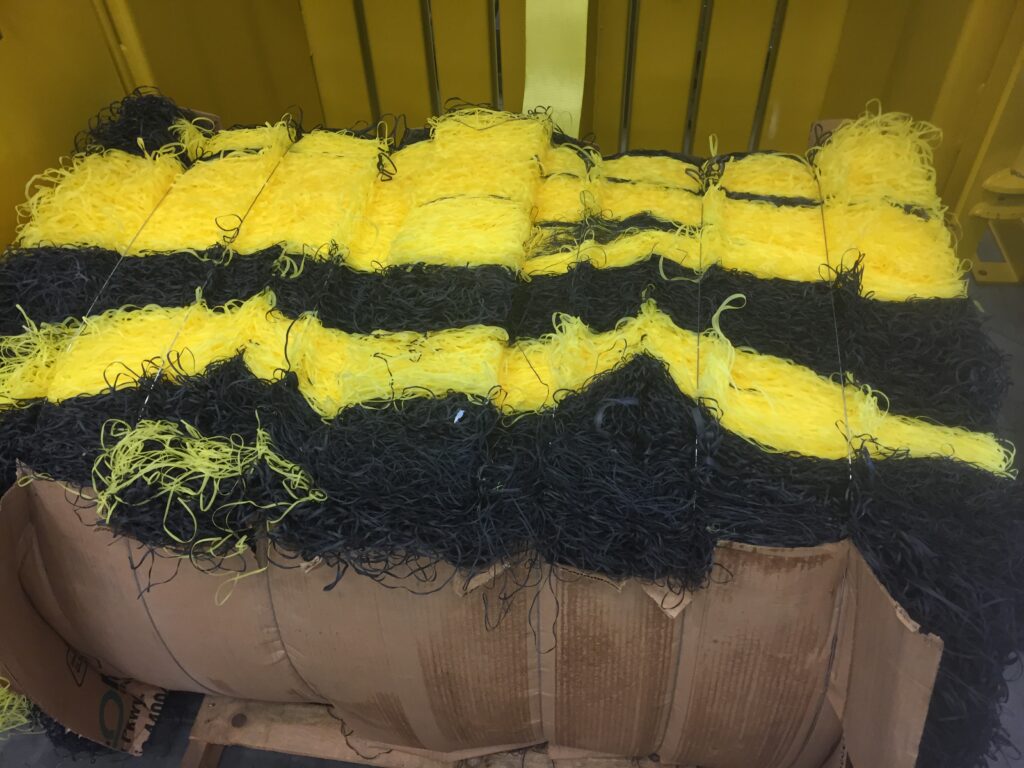
Today’s recycling operations handle cotton, polyester, rayon, linen, wool, nylon, acrylic, denim, canvas, upholstery fabrics, mattress materials, industrial wipes, felt, carpet fibers, fabric roll ends, yarn waste, fiber production waste, mixed textiles, and nonwoven materials.
Choosing the Right Textile Baler
 Vertical balers are ideal for retailers, charities, municipalities, and smaller manufacturers. Semi-automatic balers fit growing recycling operations and regional processing centers. Fully automatic horizontal balers are designed for high-volume textile recyclers and manufacturers requiring continuous operation with maximum throughput. Harmony manufactures the widest variety of long lasting textile balers on the market.
Benefits of Baling Textile Waste
A properly sized textile baler saves valuable floor space, lowers transportation costs, improves workplace safety, increases recycling revenue through dense, consistent bales, and supports sustainability initiatives by diverting more textiles from landfills.
The Future of Textile Recycling
Advanced fiber sorting, AI-assisted material identification, automated optical scanning, and chemical recycling technologies are expanding what can be recovered from post-consumer textiles. High-quality baled feedstock will become increasingly valuable as the circular economy continues to grow.
Textile Market Insight
Textile recycling is no longer limited to thrift stores and charitable donations. Manufacturers, retailers, municipalities, automotive suppliers, healthcare organizations, and industrial producers are all seeking better ways to recover valuable textile materials while reducing landfill disposal costs. Efficient collection and high-density baling remain essential to profitable textile recycling operations.
Let Harmony Help Today!
Whether you’re recycling apparel, upholstery, carpet, industrial fibers, or manufacturing scrap, Harmony Enterprises offers durable textile balers engineered for long-term reliability and maximum performance. Contact Harmony Enterprises today for a free consultation and equipment recommendation tailored to your operation.