Monday Market Insight: Building a Better Workplace Recycling Program
Week of September 7, 2026
As businesses settle back into full operations following the summer months, September provides an ideal opportunity to evaluate workplace recycling programs. Increased production schedules, higher shipping volumes, and greater employee activity often result in more recyclable materials entering the waste stream. Without a well-organized recycling program, valuable commodities can quickly become contaminated or end up in the landfill.
An effective workplace recycling program extends well beyond simply placing recycling containers throughout a facility. Success depends on employee education, consistent collection practices, proper equipment, and ongoing monitoring to ensure recyclable materials remain clean and marketable.
Every organization generates different recyclable materials based on its operations. Manufacturing facilities often produce corrugated cardboard, stretch film, metals, and pallets. Retail stores typically generate OCC, paperboard, shrink wrap, and plastic film. Distribution centers handle large volumes of corrugated packaging while healthcare facilities recycle office paper, cardboard, rigid plastics, and aluminum beverage containers where appropriate.
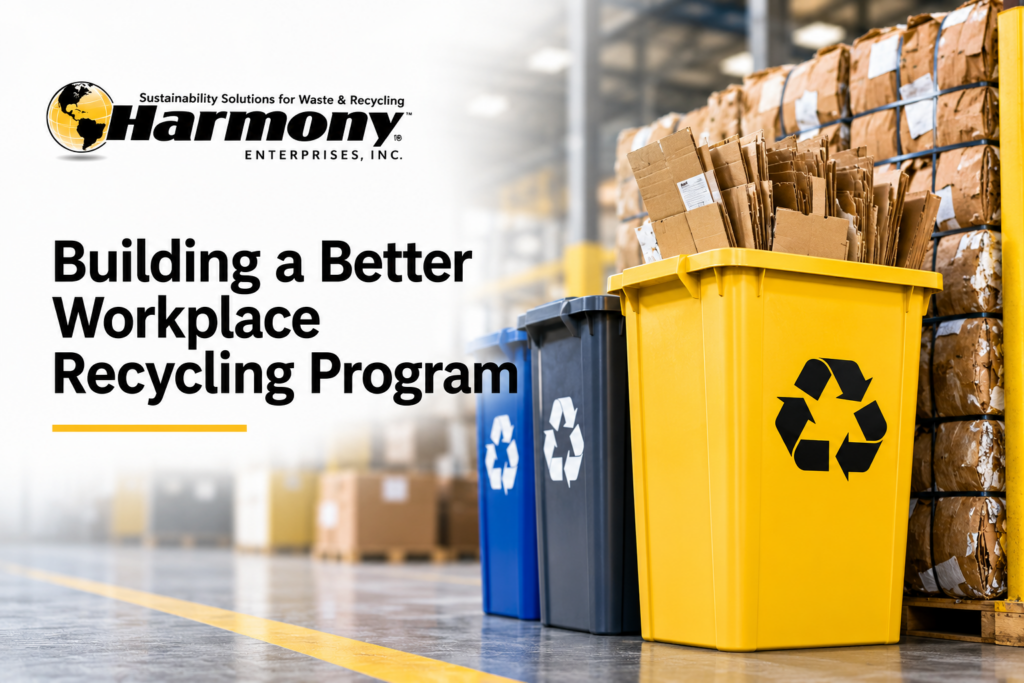 One of the most common challenges businesses face is contamination. Food waste, liquids, plastic bags in paper recycling, and non-recyclable materials mixed with valuable commodities reduce the overall quality of recyclable loads. Even small amounts of contamination can decrease commodity value and increase processing costs for recycling facilities.
Employee training remains one of the most effective ways to improve recycling performance. Clearly labeled collection containers, consistent signage, and periodic reminders help employees understand which materials belong in each stream. Facilities that make recycling simple generally experience higher participation and cleaner recyclable materials.
Equipment also plays an important role in successful recycling programs. Balers, compactors, and collection systems help businesses efficiently manage recyclable materials while reducing hauling frequency and maximizing transportation efficiency. Producing dense, mill-quality bales not only improves storage and handling but also increases the marketability of recyclable commodities.
Many organizations also benefit from periodically reviewing waste generation patterns. Tracking the volume of recyclable materials being collected can identify opportunities to improve recovery rates, reduce landfill costs, and optimize collection schedules.
As sustainability initiatives continue expanding across nearly every industry, customers, employees, and stakeholders increasingly expect organizations to demonstrate responsible waste management practices. A well-managed recycling program supports environmental goals while delivering measurable operational and financial benefits.
September offers the perfect opportunity to refresh recycling procedures, inspect equipment, retrain employees, and prepare facilities for increased activity during the busy fall season.
Market Insight
The most successful recycling programs are rarely the most complicated—they’re the most consistent. Clean material separation, employee engagement, and properly maintained equipment create long-term value regardless of changing commodity markets. Investing in your recycling program today often leads to lower operating costs, improved sustainability performance, and higher-quality recyclable commodities tomorrow.
Harmony Is Your Go-To Resource!
Whether you’re evaluating your current recycling program or planning facility improvements, Harmony Enterprises can help identify equipment and workflow solutions that maximize recycling efficiency while reducing waste handling costs. From vertical balers and horizontal balers to compactors and smart waste monitoring solutions, we’re here to help your organization recycle more effectively.