What Is a Breakaway Compactor?
If your facility generates significant volumes of dry waste, cardboard, packaging materials, or recyclables, you’ve likely heard the term “breakaway compactor.” But what exactly is it, and how does it differ from other waste compaction systems?
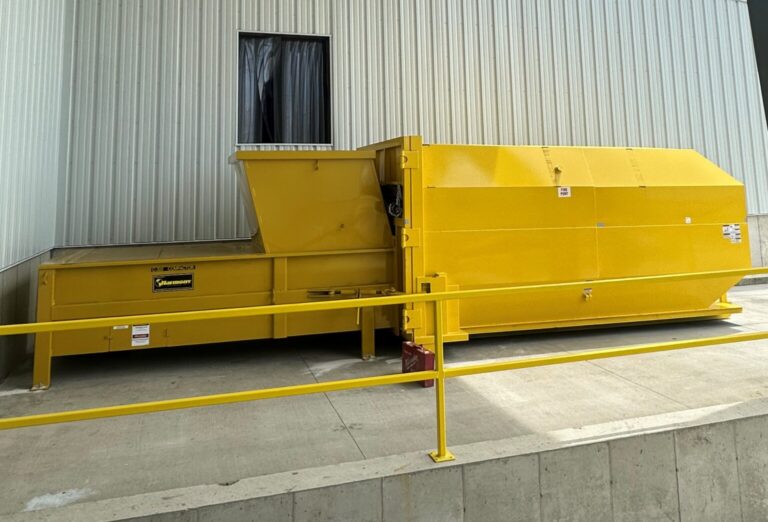
This C300 Stationary Compactor is connected to a larger container for maximum compaction volume.
A breakaway compactor, more commonly known as a stationary compactor, is a waste compaction system consisting of two separate components: a permanently installed compactor unit and a detachable waste container. The compactor remains on-site while the container can be removed, emptied, serviced, or replaced as needed.
This design makes breakaway compactors one of the most popular waste handling solutions for distribution centers, manufacturing facilities, retail operations, hospitals, warehouses, and commercial properties that generate large volumes of dry waste.
How Does a Breakaway Compactor Work?
The process is simple and highly effective.
Waste material is loaded into the compactor’s charge chamber through a feeding system such as a hopper, chute, deck, or ground-level loading area. A hydraulic ram then compresses the material and pushes it into a connected receiver container.
As additional waste is loaded, the process repeats until the container reaches capacity. Once full, the receiving container is disconnected from the stationary compactor and hauled away by a roll-off truck. An empty container is then attached, allowing operations to continue with minimal disruption.
Why Is It Called a Breakaway Compactor?
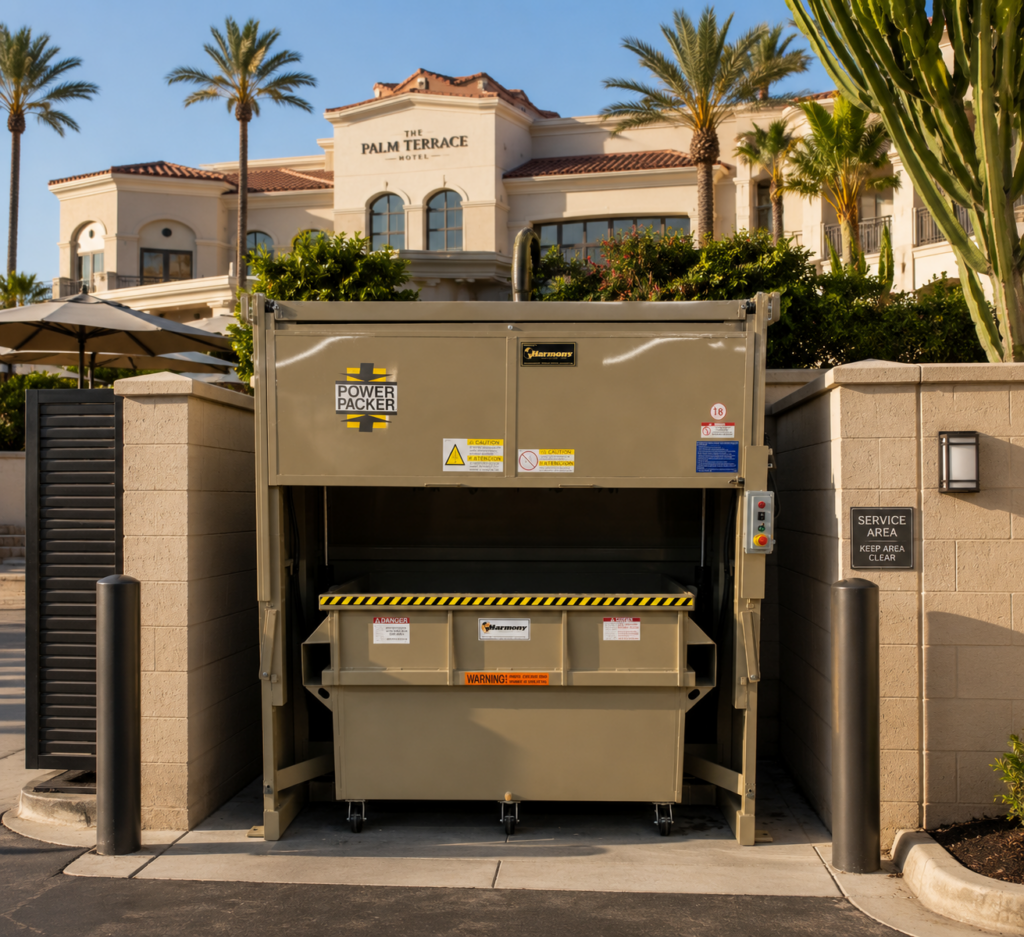
Stationary breakaway compactors can be horizontal or vertical in design, like this P200 in CA.
The term “breakaway” refers to the detachable container design.
Unlike a self-contained compactor, where the compactor and container remain permanently attached and are hauled away together, a breakaway compactor separates from the receiver box when service is required. Only the container leaves the site while the compactor remains in place.
This approach can reduce hauling costs and improve operational efficiency for facilities generating large volumes of dry waste.
Common Feeding Configurations
One of the biggest advantages of stationary compactors is their flexibility. Depending on the application, they can be configured with a variety of loading methods.
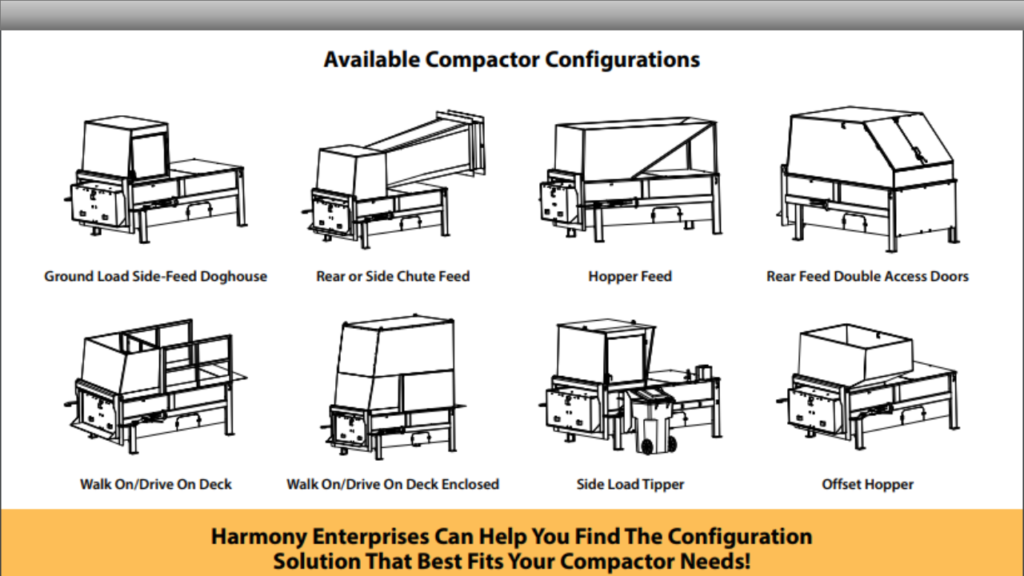
Hopper Feed
Waste is deposited into a hopper mounted above or adjacent to the compactor. This is one of the most common feeding methods for commercial and industrial facilities.
Chute Feed
Multi-story buildings, hospitals, apartments, and manufacturing facilities often utilize chutes that deliver waste directly into the compactor from inside the building.
Ground Feed
Employees or equipment operators load materials directly into the charge chamber from ground level, typically from the side or rear of the machine.
Walk-On or Drive-On Decks
Facilities generating large quantities of waste may utilize elevated platforms that allow carts, pallet jacks, or forklifts to deliver material directly to the compactor.
Tipper Systems
Automated cart tippers can lift and empty containers into the compactor, reducing manual handling and improving safety.
What Materials Can Be Compacted?
Breakaway compactors are best suited for dry waste streams and recyclable materials, including:
- Cardboard
- Mixed paper
- Plastic packaging
- Shrink wrap
- General commercial waste
- Manufacturing scrap
- Textile waste
- Distribution and warehouse waste
For wet waste applications, a self-contained compactor is often the preferred solution because it helps contain liquids and prevent leakage during transport.
Benefits of a Breakaway Compactor
Organizations choose stationary compactors for several reasons:
Reduced Hauling Costs
Compacting waste allows facilities to maximize container capacity and reduce the number of waste pickups required throughout the year.
Improved Site Cleanliness
Compactors help eliminate overflowing dumpsters and reduce loose debris around waste collection areas.
Better Space Utilization
Waste volume can often be reduced significantly, helping organizations reclaim valuable space for operations, inventory, and storage.
Enhanced Safety
Reducing waste accumulation helps create cleaner, more organized work environments while minimizing potential hazards.
Long-Term Operational Efficiency
Stationary compactors are designed for high-volume waste generation and can be configured to meet the unique needs of almost any facility.
Is a Breakaway Compactor Right for Your Facility?
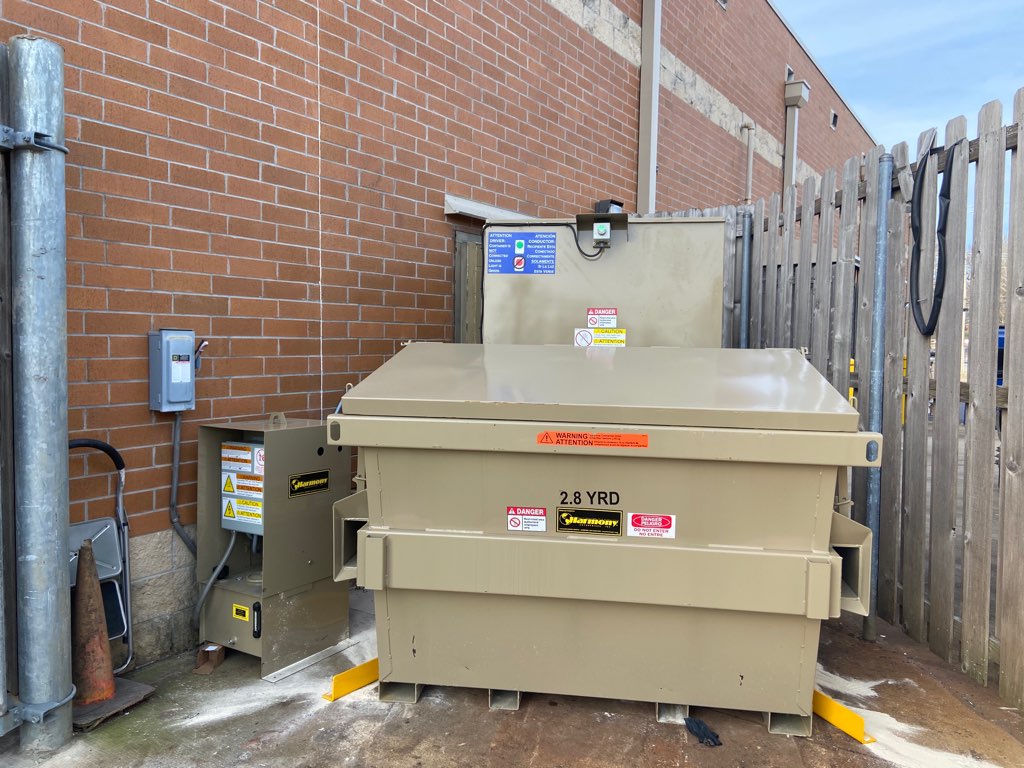
C100 Stationary compactor that is chute fed from inside a retail location.
A breakaway compactor may be the ideal solution if your organization:
- Generates large volumes of dry waste or recyclables
- Wants to reduce hauling expenses
- Has adequate outdoor space for a stationary installation
- Requires flexible feeding configurations
- Needs a durable, long-term waste management solution
Facilities ranging from retail stores and distribution centers to manufacturers, hospitals, universities, and municipal operations frequently utilize stationary compactors to improve waste handling efficiency and reduce operating costs.
Ready to Reduce Waste Handling Costs?
Every facility has unique waste streams, collection schedules, space constraints, and operational requirements. Choosing the right stationary compactor configuration can have a significant impact on hauling costs, labor efficiency, site cleanliness, and overall operational performance.
Whether you’re evaluating a new installation, replacing aging equipment, or exploring ways to improve your waste management process, Harmony Enterprises can help identify the best solution for your application.
Let Harmony Help You Find the Right Solution
Our team can assist with:
- Evaluating your current waste handling process
- Identifying opportunities to reduce hauling costs
- Determining the ideal compactor and container configuration
- Reviewing feed options including hoppers, chutes, decks, and tippers
- Calculating potential return on investment
- Recommending equipment based on your waste stream and facility layout
Ready to learn if a breakaway compactor is right for your operation?
Call us at (507) 886-6666 or fill out this simple form to explore potential savings and operational improvements.
Frequently Asked Questions
Organizations evaluating stationary compactors often have questions about how these systems operate, what materials they can process, and whether a breakaway compactor is the right fit for their facility. The answers below address some of the most common questions we receive from customers considering a stationary compaction system.
Yes. By compacting waste before collection, stationary compactors allow organizations to maximize container capacity and often reduce the number of required hauls. This can result in meaningful savings over time, particularly for facilities generating large volumes of waste.