Mixed Paper Isn’t Dead: Understanding Export vs. Domestic Demand
Week of August 10, 2026
For years, mixed paper has experienced some of the recycling industry’s biggest market swings. Many businesses assumed the commodity had permanently lost its value following China’s National Sword policy and changing global trade dynamics. The reality is far more encouraging.
Today, mixed paper remains an important recyclable commodity because demand now comes from both export markets and a growing domestic manufacturing base. While pricing may not match premium OCC grades, clean mixed paper continues to move through the marketplace and plays a valuable role in supplying recycled fiber for packaging, paperboard, tissue products, and molded fiber packaging.
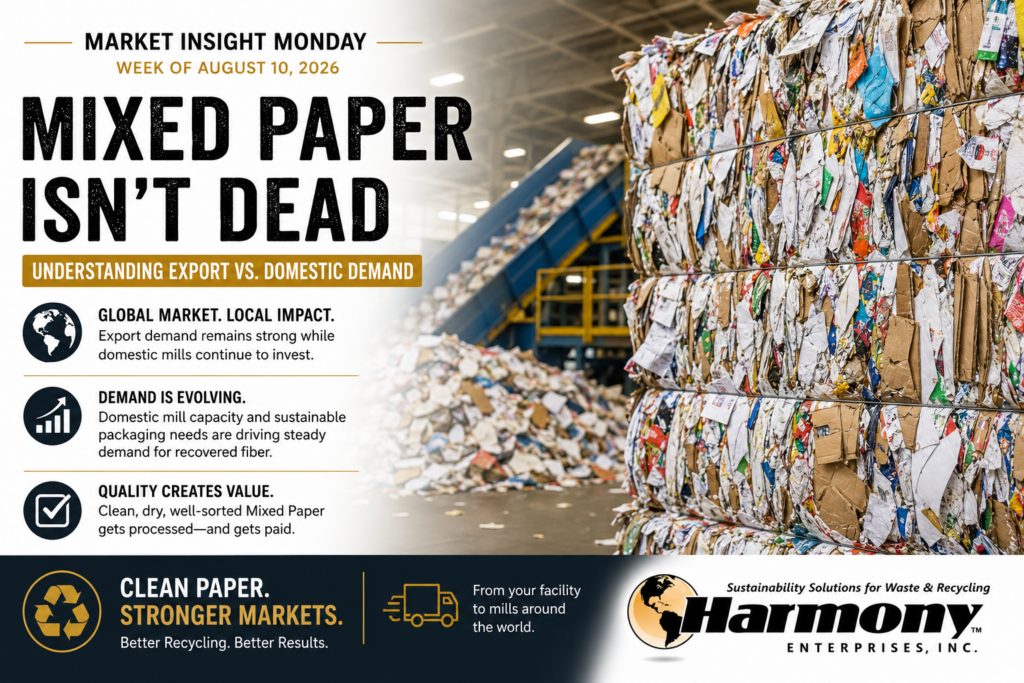 Export demand continues to influence pricing. International buyers, particularly throughout Southeast Asia and India, purchase significant volumes of recovered fiber from North America. Changes in freight costs, shipping capacity, currency exchange, and overseas manufacturing activity can all impact export demand from month to month.
At the same time, domestic demand has quietly strengthened. Paper mills across North America have invested billions of dollars in equipment capable of processing recovered fiber into new packaging products. As consumer demand shifts toward sustainable packaging, these investments continue creating long-term demand for recovered paper.
For businesses generating mixed paper, quality remains the greatest opportunity to maximize value. Keeping paper dry, separating cardboard from mixed grades when practical, removing food waste and plastics, and reducing contamination all improve marketability regardless of whether material is sold domestically or exported.
The takeaway is simple: mixed paper isn’t dead. It has simply become a market where quality, consistency, and proper preparation matter more than ever.
Market Insight of the Week
The strongest mixed paper programs aren’t built around chasing the highest commodity price. They’re built around producing consistent, clean material that buyers can confidently process, regardless of whether the destination is a domestic mill or an overseas manufacturer.
Let Harmony Help!
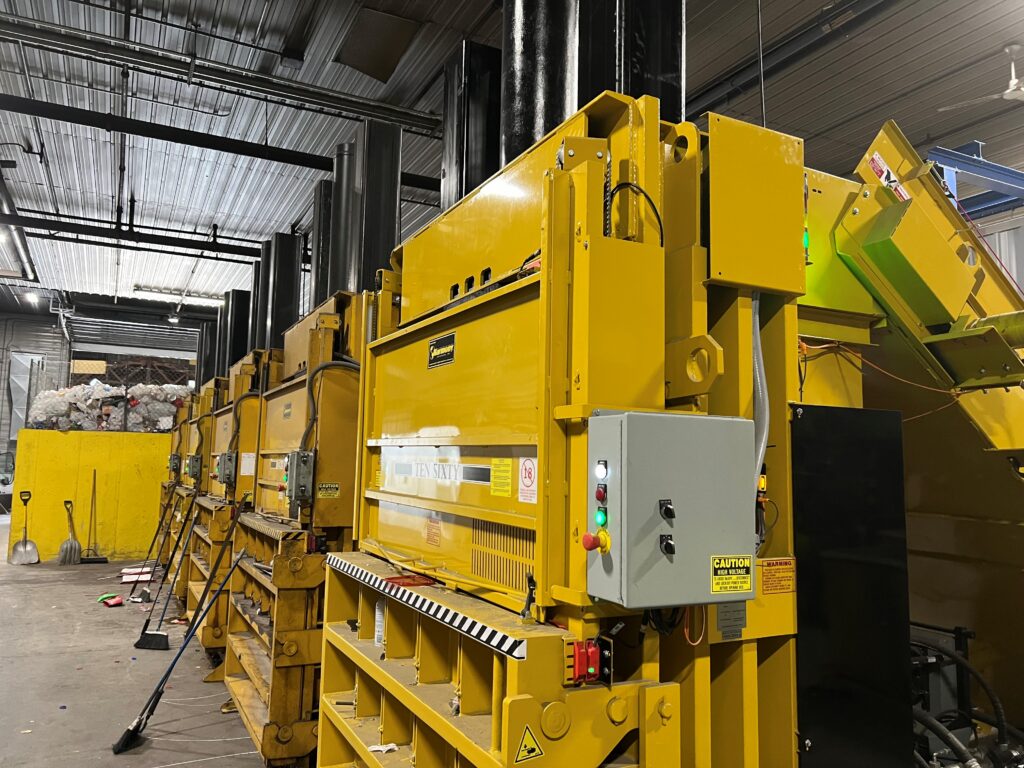 Is your facility generating large volumes of mixed paper, office paper, packaging, or corrugated cardboard? Harmony Enterprises helps businesses improve recycling efficiency with balers, compactors, and customized waste handling solutions designed to produce cleaner, more marketable recyclable materials.
Our team can evaluate your current recycling process, identify opportunities to reduce contamination, improve bale quality, and maximize transportation efficiency through a complimentary site review and ROI analysis.
Contact Harmony Enterprises today to learn how better equipment and smarter recycling practices can improve operational efficiency while creating greater long-term recycling value.
Resources & Market References
ReMA (Recycled Materials Association): https://www.recycledmaterials.org
Industry reports, recovered fiber market trends, export information, and recycling policy updates.
Fastmarkets RISI: https://www.fastmarkets.com
Global recovered paper pricing, fiber market analysis, mill investments, and packaging trends.
Resource Recycling: https://resource-recycling.com
North American recycling news, recovered fiber markets, and domestic mill developments.
American Forest & Paper Association (AF&PA): https://www.afandpa.org
Industry data on paper recycling, recovered fiber usage, and U.S. paper manufacturing.
EPA Paper Recycling Information: https://www.epa.gov/recycle/paper-recycling
Paper recovery statistics, recycling best practices, and sustainability resources.