How to Choose the Right Carton Baler for Your Waste Stream
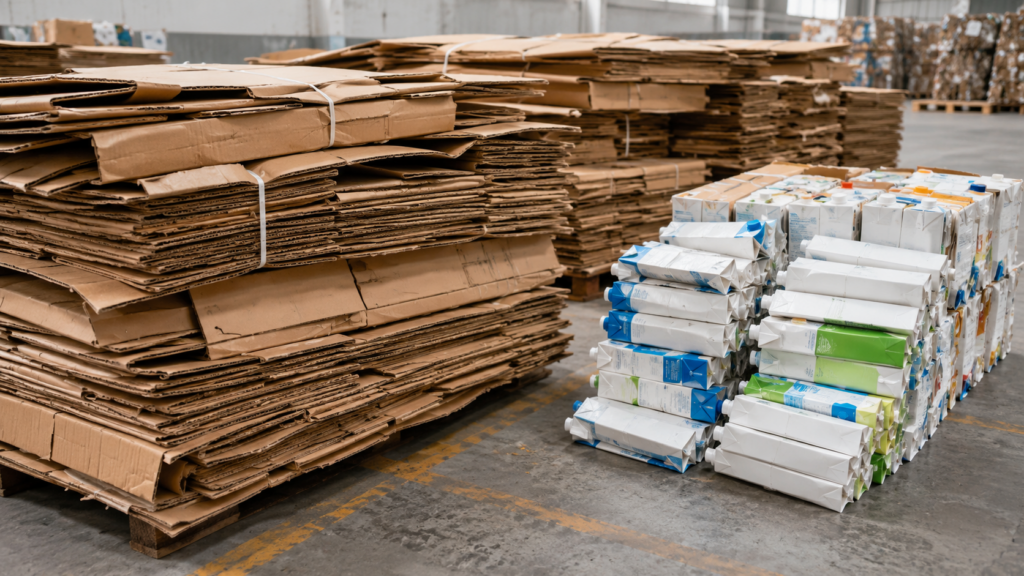 Cartons are used throughout nearly every part of the supply chain. They transport products into retail stores, protect parts in manufacturing facilities and package food and beverages for consumers. Once emptied or removed from inventory, however, those cartons can quickly consume valuable floor, storage and dumpster space.
A carton baler compresses loose cartons into dense, uniform bales that are easier to store, handle and transport for recycling. The right baler can reduce waste volume, improve workplace organization, lower hauling costs and help a business recover more value from recyclable material.
Not every carton is the same, though. Choosing the right carton baling machine begins with understanding the type of carton being processed, how much material is generated and whether the cartons are empty, contaminated or still filled with product.
What Is a Carton Baler?
A carton baler is a machine that uses hydraulic pressure to compress cartons and other approved packaging materials into manageable bales. Depending on the machine and application, the finished bales may be secured with wire or banding before being stored and transported.
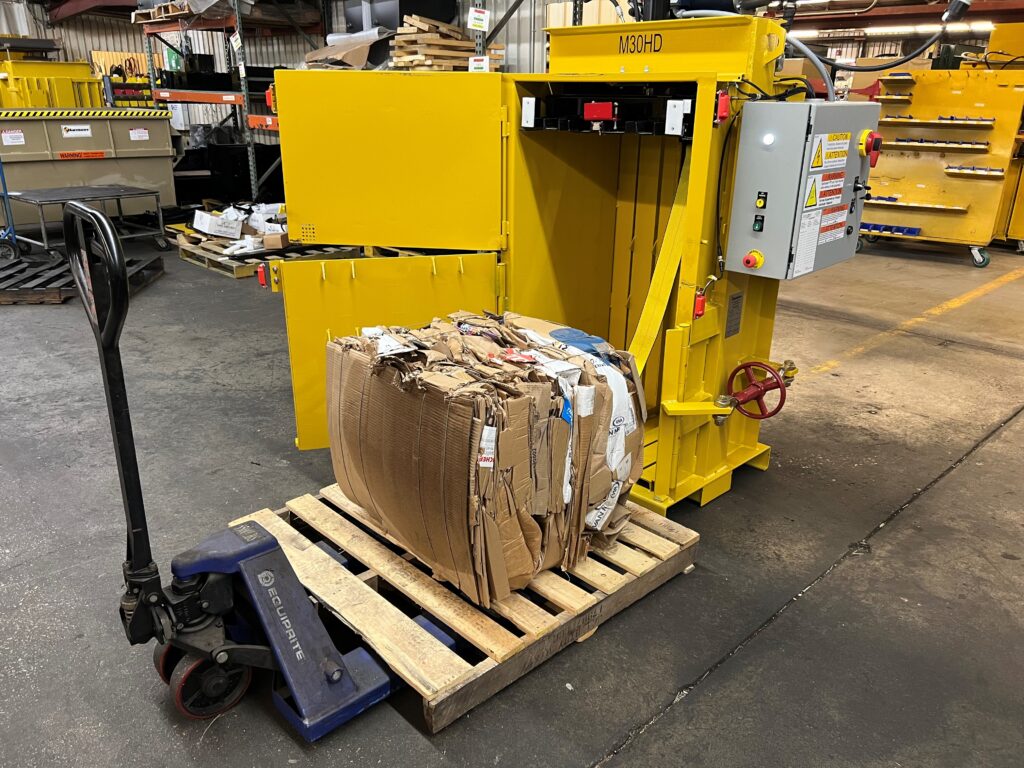 Carton balers are commonly used by retail stores, grocery chains, distribution centers, manufacturers, packaging operations, recycling facilities, schools, hospitals and other organizations that generate a consistent volume of packaging waste.
Although the terms carton baler and cardboard baler are sometimes used interchangeably, the word carton can describe several different types of packaging. That distinction matters when choosing equipment and determining how the finished material will be recycled.
What Types of Cartons Can Be Baled?
The first step in choosing a carton baler is identifying the material your facility generates.
Corrugated cartons are the shipping boxes commonly found in retail, manufacturing, warehousing and distribution operations. This material is generally classified as old corrugated containers, or OCC. Clean and dry OCC is an established recyclable commodity, and baling it creates consistent loads that are easier for recycling partners to collect and transport.
Paperboard cartons are thinner and include items such as cereal boxes, pharmaceutical packaging and folding product cartons. Depending on the local recycling provider, these cartons may be accepted with mixed paper or another fiber grade rather than OCC.
Food and beverage cartons require additional consideration. These include refrigerated gable top cartons used for products such as milk, cream and juice, along with shelf stable aseptic cartons used for broth, soup, wine, plant based beverages and nutritional drinks.
Food and beverage cartons are made primarily from high quality paper fiber with thin layers of plastic and, in the case of aseptic cartons, aluminum. When properly sorted and prepared, aseptic and gable top cartons have their own recycling specification, Grade #52. Facilities should confirm acceptance and bale specifications with their recycling provider or end market before processing these cartons.
Empty Cartons vs. Full Cartons
One of the most important questions when selecting a carton baler is whether the packaging is empty.
A standard cardboard or paper baler is designed for clean, dry material. It is not intended to manage leaking packages or large quantities of liquid. Placing filled beverage cartons into equipment that is not designed for liquid extraction can create sanitation issues, equipment problems and contaminated bales.
Food and beverage manufacturers, distributors and retailers may need to process expired products, damaged shipments, recalls, production overruns, quality control rejects or incorrectly labeled inventory. In these applications, specialized product destruction or liquid extraction equipment may be needed.
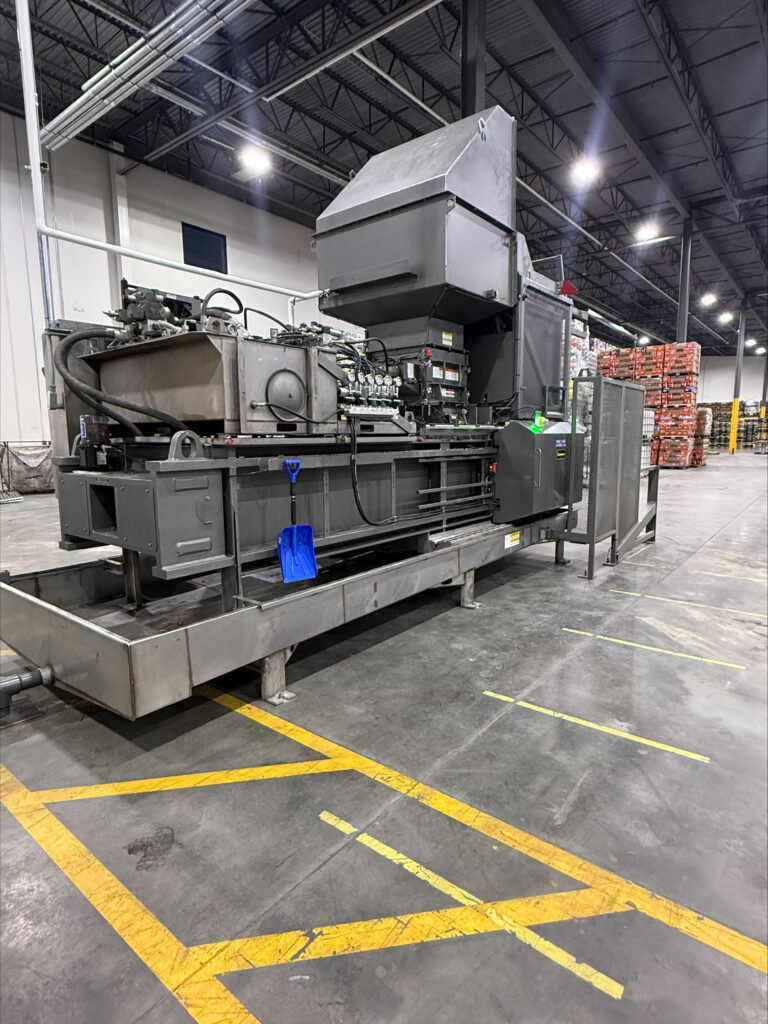 A beverage destruction baler can crush the packaged product, release and collect the liquid and consolidate the remaining packaging. However, not every machine is suitable for every carton style, closure or product consistency. The complete application should be reviewed by the equipment manufacturer before a liquid extraction baler is selected.
Vertical Carton Balers for Moderate Volumes
A vertical carton baler is often the most practical solution for facilities that generate low to moderate quantities of dry corrugated cartons. Vertical balers load from the front and compress material downward inside the chamber. Their relatively small footprint makes them a good fit for stockrooms, loading areas, retail locations and manufacturing facilities where operating space is limited.
The correct machine depends on the dimensions of the cartons, the amount of material generated, available ceiling height, electrical service and the bale size preferred by the recycling provider.
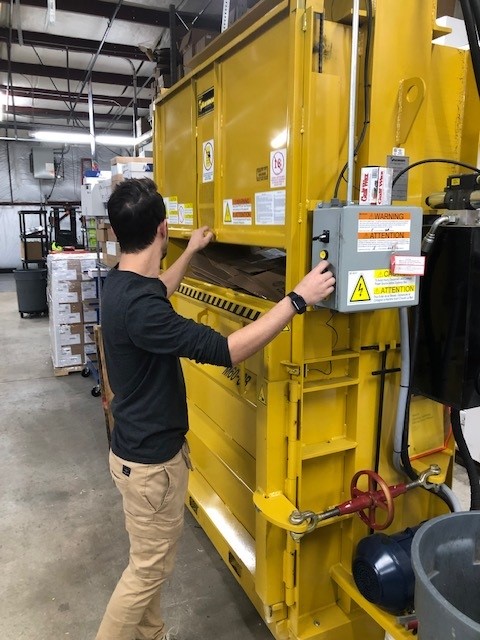 For example, Harmony’s M60CB Vertical Cardboard Baler has a 24 by 60 inch feed opening and produces OCC bales weighing up to approximately 1,000 pounds. Facilities processing oversized corrugated cartons may benefit from the M72HD High Density Vertical Baler, which has a 72 inch wide feed opening and can produce OCC bales weighing up to approximately 1,300 pounds.
A wider loading opening may also reduce the amount of time employees spend manually breaking down cartons before placing them into the baler.
Horizontal Carton Balers for Higher Throughput
Warehouses, distribution centers, packaging plants and recycling operations may generate cartons too quickly for a standard vertical baler. A horizontal carton baler supports greater throughput and can provide a more continuous material handling process.
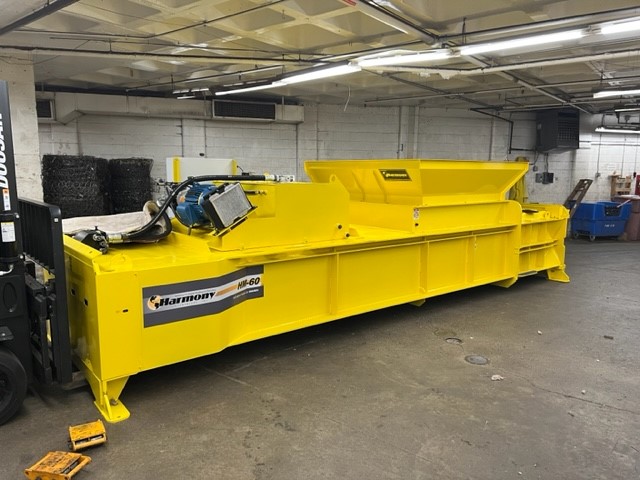 Horizontal balers can be configured with hoppers, tippers or conveyors to reduce manual handling. Certain models also use a shear blade to cut excess material extending above the compression chamber. This allows cartons to be continuously loaded while reducing the risk of jams caused by material bridging or overfilling the chamber.
Harmony’s HM-60 Closed Door Horizontal Baler features a 27 point chassis shear blade, multiple feeding options and a full bale eject system. It can produce OCC bales weighing approximately 1,300 to 1,500 pounds, depending on the machine configuration and material conditions.
Very high volume operations may benefit from an automatic tie or two ram carton baler. Harmony’s HM-AI60 Open End Auto Tie Baler is designed for high volumes of corrugated cardboard, cartons, tissue, newspaper and other paper products. The HM-2R185 Two Ram Horizontal Baler is another option for high volume facilities processing several recyclable commodities.
How to Select the Right Carton Baling Machine
Selecting a carton baler based only on its purchase price can lead to inefficient loading, unnecessary labor and bales that do not meet a recycler’s requirements. A complete equipment review should consider:
- The type, size and condition of the cartons
- The daily and weekly volume of material
- Whether the cartons are empty, contaminated or filled with product
- The desired bale size and weight
- Available floor space and operational height
- Electrical service and installation requirements
- Manual, tipper, hopper or conveyor feeding
- Current labor, hauling and disposal costs
It is also important to speak with the company receiving the finished bales. Ask which carton grades it accepts, whether materials must remain separated and what bale size, weight and contamination standards apply.
Can Different Types of Cartons Be Baled Together?
Corrugated cartons, folding paperboard and food and beverage cartons should not automatically be combined. They may have different commodity classifications, processing requirements and end markets.
Combining materials without approval can reduce bale quality or cause a recycling load to be rejected. Food residue, liquids, plastic liners and other contaminants can create additional problems.
Your recycling provider should determine whether different carton types can be collected together. Its requirements should guide your sorting process, equipment selection and employee training.
The Operational Benefits of a Carton Baler
Loose cartons are bulky even when they weigh relatively little. They can quickly fill dumpsters, trailers and storage areas with unused air, leading to more pickups and unnecessary handling.
A properly sized carton baler removes much of that air and turns loose packaging into uniform bales. This can reduce hauling frequency, free up valuable floor space and improve organization around loading docks, stockrooms and production areas. Baling can also reduce the time employees spend flattening cartons, moving loose material and managing overflowing containers.
Clean, properly sorted bales may also be more marketable than loose or contaminated packaging. Actual recycling revenue varies by material grade, bale quality, volume, location and current commodity markets, so facilities should avoid assuming that every carton bale will generate income.
Find the Right Carton Baler for Your Operation
The best carton baler is not simply the largest or most powerful machine. It is the baler that fits the material, volume, available space, labor requirements and recycling outlet of the operation.
Harmony Enterprises manufactures vertical, horizontal, automatic tie, two ram and liquid extraction balers for a wide range of recycling and product destruction applications. Our team can review your waste stream, current handling process and facility requirements to recommend an efficient, long lasting solution.
Whether your operation handles dry corrugated cartons at a retail store, continuously generates packaging waste at a distribution center or needs to destroy unsellable packaged beverages, Harmony can help determine the right equipment for your application.
Contact Harmony Enterprises today to request a free site review, carton baler recommendation or equipment quote.