What Happens to Your Recyclables After Pickup?
Week of September 28, 2026
Once recyclable materials leave your facility, their journey is only beginning.
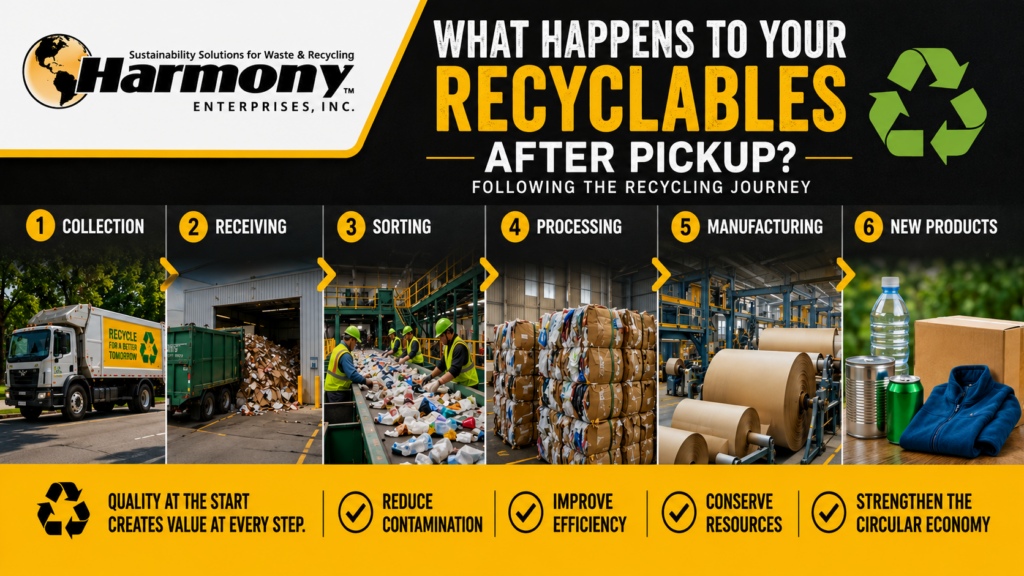
Collected materials are transported to recycling facilities, transfer stations, material recovery facilities (MRFs), or directly to specialized processors depending on the commodity. There, recyclables are inspected, sorted, graded, and prepared for shipment to paper mills, plastic reclaimers, aluminum processors, steel mills, and manufacturers that use recovered materials to produce new products.
Throughout this process, material quality plays a critical role. Clean, well-sorted recyclables require less processing, reduce contamination, and help improve transportation efficiency. Dense, properly prepared bales further streamline handling while helping processors maximize storage space and trailer utilization.
Recovered fiber may become new corrugated boxes or paper packaging. Recycled PET plastic can be transformed into new bottles, containers, carpeting, or textiles. Aluminum beverage cans often return to store shelves as new cans in as little as 60 days, while recycled steel becomes automobiles, appliances, construction materials, and countless manufactured products.
Every step in the recycling process depends on quality materials entering the system. By reducing contamination, separating commodities properly, and following recycling best practices, organizations help strengthen the circular economy while conserving natural resources and reducing landfill waste.
Market Insight of the Week
Recycling doesn’t end when materials leave your dock.
Every clean bale and properly sorted load supports a larger supply chain that transforms recovered materials into the products we use every day. Quality at the point of collection helps create value throughout the entire recycling process.
This Market Insight is provided for educational purposes only and reflects general recycling processes and publicly available industry information. Recycling practices, processing methods, and end markets vary by material type, geographic region, and recycling provider. Organizations should consult their recycling partner for information specific to their local recycling program.
Additional Resources
Recycled Materials Association (ReMA)