Why Bale Density Matters: How Better Bales Increase Commodity Value
Week of September 21, 2026
When it comes to recycling, bigger isn’t always better—but denser almost always is.
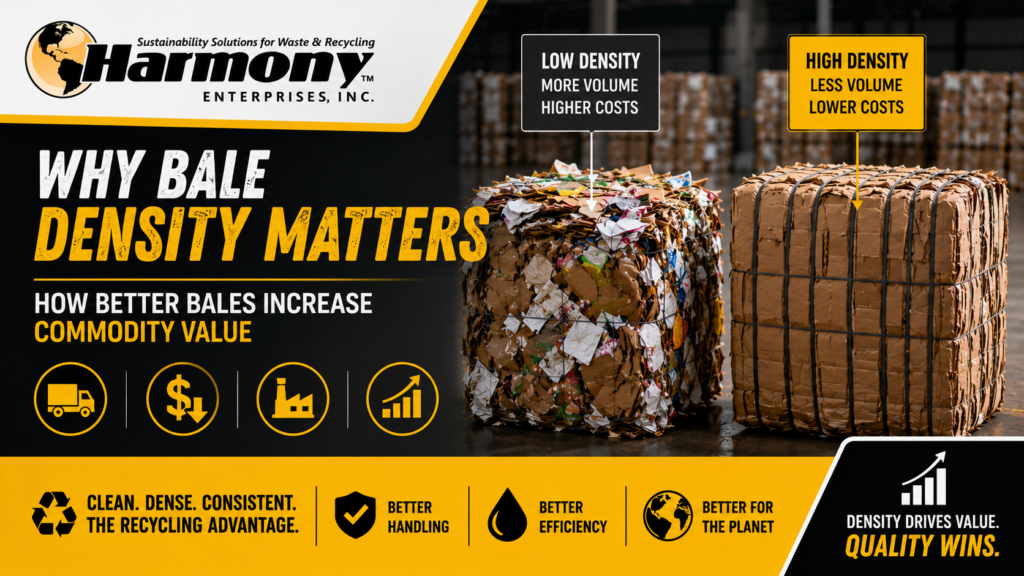
Bale density plays an important role in transportation efficiency, storage capacity, processing costs, and ultimately the marketability of recyclable materials. Dense, well-formed bales maximize trailer payloads, reduce freight costs per ton, improve handling efficiency, and help recycling facilities meet the specifications expected by mills and processors.
Loose or underweight bales often require additional handling, consume more trailer space, and may not meet buyer preferences. Conversely, consistent bale size and density help streamline transportation and processing while reducing operational costs throughout the recycling supply chain.
Proper equipment maintenance, correct operating procedures, and appropriate material preparation all contribute to producing higher-quality bales. While commodity markets fluctuate based on supply and demand, operational improvements like bale density remain one of the few factors organizations can directly control.
Facilities that consistently produce dense, uniform bales often experience improved transportation efficiency, cleaner storage areas, and stronger market acceptance of their recyclable materials.
Market Insight of the Week
Commodity markets value consistency.
Producing dense, well-shaped, contamination-free bales helps maximize trailer utilization, reduce handling costs, and improve overall recycling efficiency—regardless of market conditions.
This Market Insight is provided for educational purposes only and is based on general industry practices and publicly available information. Bale specifications, commodity values, and buyer requirements vary by material, processor, and market conditions. Organizations should consult their recycling partner or equipment provider for guidance specific to their operation.
Additional Resources
OCC Design Guide – Fibre Box Association
A valuable resource explaining corrugated construction, strength, and fiber recovery—helpful for understanding why dense, clean OCC bales perform better throughout the recycling process.
U.S. EPA – Sustainable Materials Management
Provides broader information on efficient materials management, transportation, and improving recycling performance across organizations.