Harmony Insite™ Connects Equipment Intelligence to Your Bigger Business Picture
What if the information collected by your waste and recycling equipment could help your organization make better decisions about staffing, purchasing, maintenance, and overall operational efficiency?
For many large organizations, the challenge isn’t a lack of data. It’s that valuable information often exists in separate systems that don’t communicate with one another.
 Consider a major airport. It may use one system for facility maintenance, another for purchasing, another for employee scheduling, and another for sustainability reporting. Each provides important information, but connecting those systems can give managers a more complete understanding of how their operations are performing.
That’s where the equipment data integration capabilities of Harmony Insite™ offer advantages that extend well beyond traditional equipment monitoring.
Making Equipment Data Part of the Bigger Picture
Depending on the connected equipment and its configuration, Harmony Insite can capture information such as operating status, cycle counts, runtime, production activity, and equipment faults.
While this information helps organizations understand how individual machines are performing, its value can extend much further when combined with other operational information.
Harmony Insite is built with an architecture that allows available equipment data to be incorporated into larger business management and enterprise data systems. This means organizations can use information from their waste and recycling equipment alongside data they already collect, without necessarily replacing their existing technology.
For larger organizations that have invested considerable resources into their software and data management infrastructure, this flexibility is especially valuable.
Flexible Access to Your Equipment Data
Harmony offers two approaches to equipment data integration, allowing customers to choose the method that best supports their technical capabilities and operational needs.
Organizations with their own information technology teams can retrieve available Harmony Insite data through application programming interfaces, commonly known as APIs, at no additional charge. Harmony also provides data dictionaries that explain the structure and meaning of the available information, helping technical teams understand and incorporate it into their existing systems.
For customers with established data management capabilities, this provides a practical way to bring equipment information into their reporting, analytics, and business management platforms.
Organizations can also arrange for Harmony to deliver selected equipment data to their existing systems through a fee based integration service, subject to technical compatibility.
This option can reduce the need for customers to develop and maintain their own data retrieval processes while providing a more automated flow of information into their established platforms.
What Could Equipment Data Integration Mean for a Major Airport?
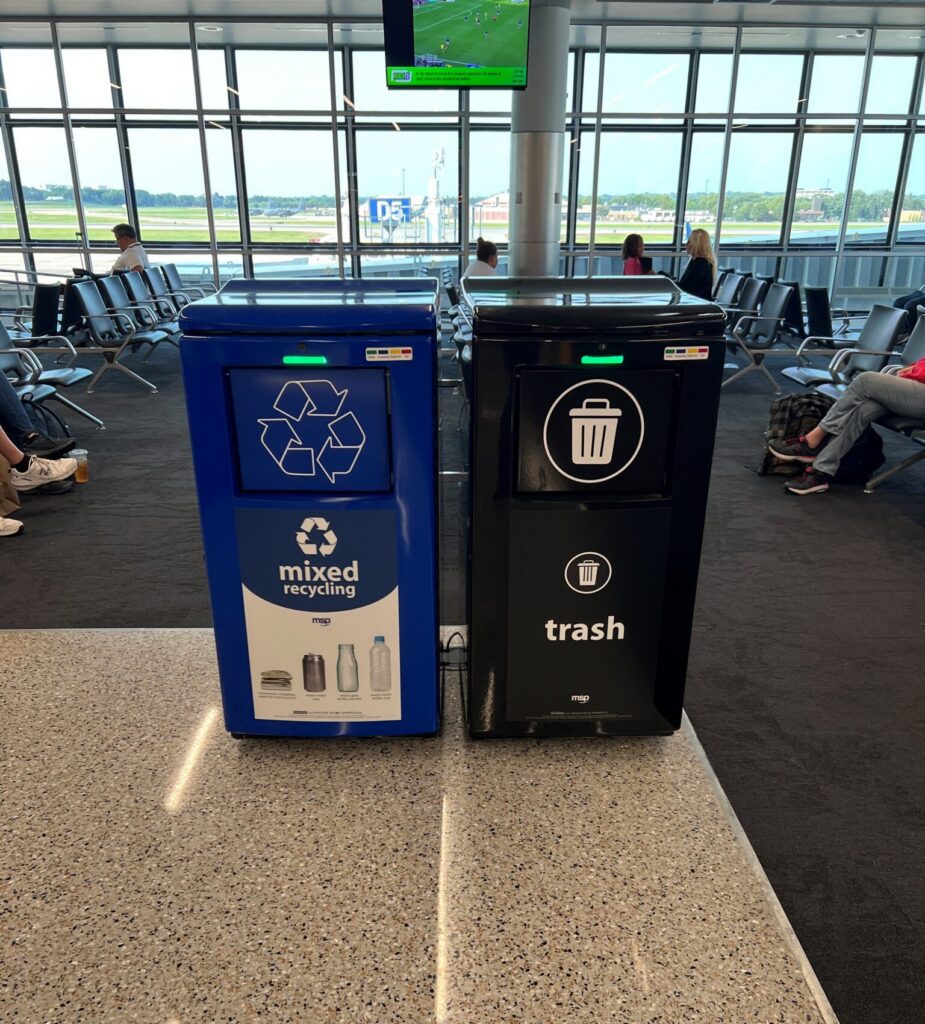 A major airport operates much like a small city. Thousands of travelers, employees, vendors, and service providers move through its facilities every day. Behind the scenes, teams coordinate purchasing, custodial services, maintenance, waste collection, recycling, and countless other activities.
Now imagine that an airport incorporates data from its connected waste and recycling equipment into its existing facility management and business intelligence systems.
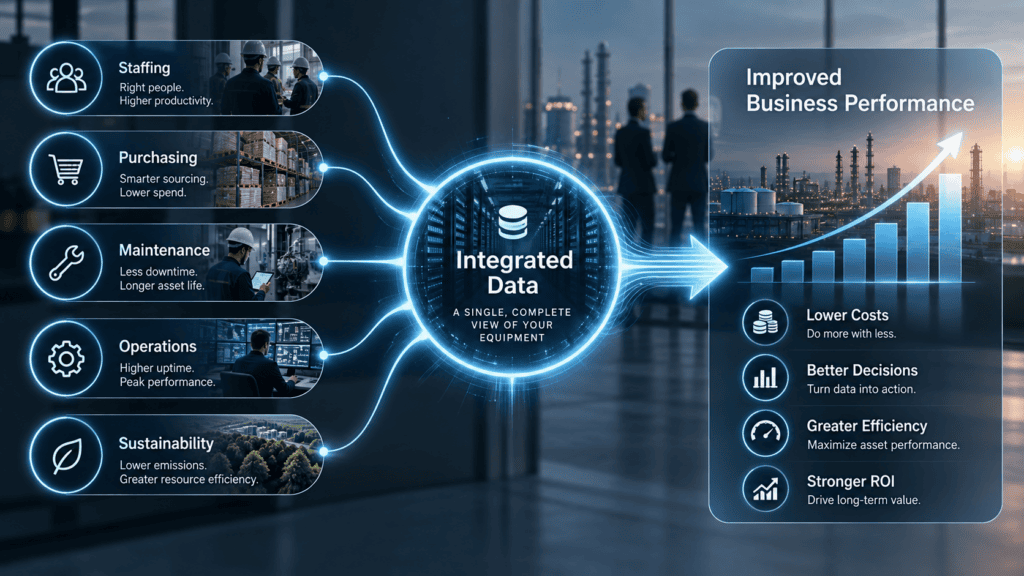
Instead of reviewing equipment information separately, airport managers could analyze machine usage and processing activity alongside passenger traffic, facility schedules, purchasing records, and staffing requirements.
Over time, those relationships could reveal patterns that support better operational decisions.
For example, equipment usage trends could help facility managers identify periods of increased waste handling activity. When compared with passenger traffic and historical staffing information, those patterns could help determine when additional custodial resources may be needed.
Similarly, equipment activity combined with purchasing records could help organizations anticipate service requirements and make more informed purchasing decisions.
Maintenance teams could incorporate machine operating information and fault notifications into their existing maintenance management systems, helping them schedule service, prioritize repairs, and reduce unexpected interruptions.
Waste and recycling managers could evaluate equipment utilization across different airport locations to identify opportunities for improved collection schedules and more efficient use of available resources.
Sustainability reporting could also benefit. When combined with other environmental information, relevant equipment data could contribute to a more complete understanding of an airport’s waste and recycling operations.
The important distinction is that Harmony Insite provides a source of equipment information that can complement the airport’s existing operational systems. The specific applications depend on the data available and how the organization chooses to use it.
Opportunities Across Multiple Industries
The same approach can benefit other organizations managing complex facilities and operations.
Universities could incorporate equipment activity into campus facility planning and recycling program analysis. Hospital systems could use operating trends to support maintenance and environmental services planning. Manufacturing facilities and distribution centers could compare equipment utilization with production schedules and material handling requirements.
Organizations with multiple locations may also benefit from bringing available equipment information into centralized reporting systems, making it easier to identify trends and compare operations across facilities.
In each case, the objective is not simply to collect more information. It’s to make better use of the information already being generated.
Better Connections Lead to Better Decisions
 Large organizations have already invested heavily in enterprise technology. Adding connected waste and recycling equipment shouldn’t mean creating another isolated source of information.
Harmony Insite’s data architecture helps address that challenge by making equipment information accessible through documented APIs and data dictionaries, along with an option for fee based data delivery.
Customers can determine how that information fits into their existing reporting tools, operational processes, and business intelligence platforms, subject to the capabilities of their systems.
As organizations continue developing more sophisticated analytics, automation, and operational planning tools, accessible equipment data can become another useful part of those efforts.
Ultimately, the value of equipment intelligence isn’t limited to knowing what a machine is doing. It’s understanding how that information can contribute to better decisions throughout an organization.
Your equipment is already generating valuable information. Harmony helps make that information accessible so it can become part of the way you manage your business.
Let’s Connect Your Data
Interested in learning how Harmony Insite equipment data could work with your organization’s existing technology systems?
Contact Harmony Enterprises to discuss available APIs, data dictionaries, and integration options.
Learn more about Harmony Insite at https://harmony1.com/harmony-products/harmony-insite-equipment-monitoring/