How Contamination Impacts Recycling Commodity Value
Week of September 14, 2026
Whether your facility recycles cardboard, plastics, aluminum, steel, or mixed paper, one factor consistently influences the value of those materials: contamination.
Contamination occurs whenever recyclable materials are mixed with non-recyclable items or when otherwise valuable commodities become soiled by food residue, liquids, excessive moisture, trash, or incompatible materials. Even small amounts of contamination can reduce bale quality, increase processing costs, and lower the market value buyers are willing to pay.
Recycling mills and material recovery facilities are investing significant resources to remove contaminants before materials can be processed. Those additional handling costs often translate into lower commodity prices or rejected loads when contamination levels exceed acceptable thresholds.
Fortunately, contamination is also one of the easiest challenges to prevent.
Clear recycling guidelines, employee training, proper container placement, routine inspections, and quality baling practices all contribute to cleaner recyclables and stronger commodity values. Facilities that consistently produce clean, dry, well-sorted materials often experience better marketability while reducing hauling and disposal expenses.
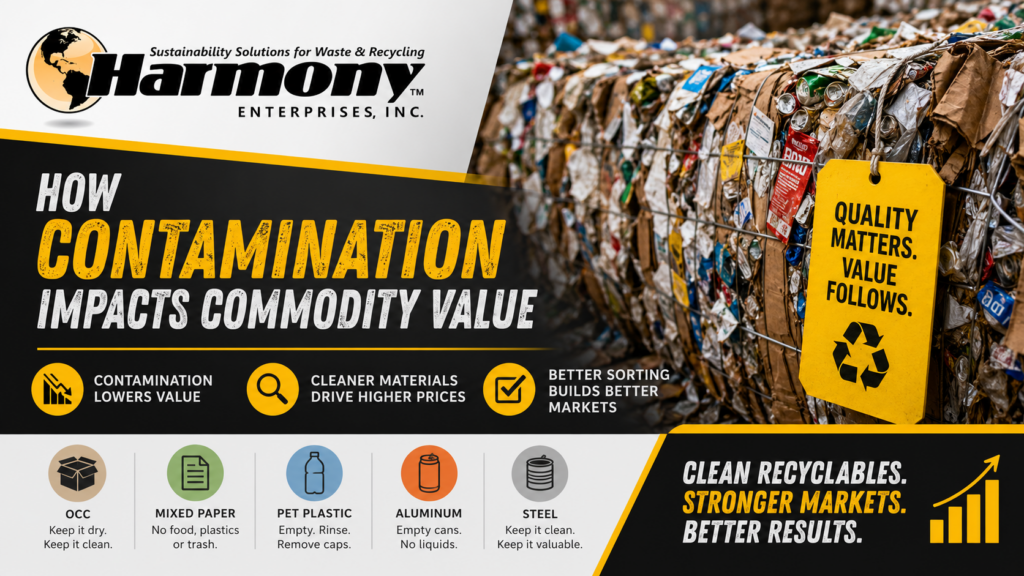
Market Insight of the Week
Commodity markets don’t simply reward volume—they reward quality.
A clean bale of OCC, PET, aluminum, or steel almost always commands greater demand than material requiring additional sorting or cleaning. Improving material quality remains one of the most effective ways organizations can maximize the value of their recycling program regardless of overall market conditions.
This Market Insight is provided for educational purposes only and is based on general industry trends and publicly available information. Commodity values and contamination standards vary by market, processor, and material quality. Please consult your recycling partner for guidance specific to your operation.
Additional Resources
- EPA: Reducing Contamination in Recycling Programs
- Association of Plastic Recyclers (APR): Recycling Design® Guide
- Institute of Scrap Recycling Industries (ISRI): Commodity Specifications
- Fibre Box Association: OCC Recycling Best Practices
- American Forest & Paper Association (AF&PA): Paper Recycling Resources