Food Waste & Organics Diversion: Turning Waste into Opportunity
Week of August 31, 2026
Food waste has become one of the largest challenges within today’s commercial waste stream. Grocery stores, restaurants, hospitals, schools, food processors, distribution centers, and other facilities generate significant volumes of organic waste every day. While much of the conversation centers on environmental impact, food waste also represents a growing operational expense through increased hauling costs, landfill tipping fees, and lost opportunities to recover valuable materials.
As organizations continue pursuing sustainability initiatives and looking for ways to improve operational efficiency, organics diversion is becoming an increasingly important component of comprehensive waste management programs.
What Is Organics Diversion?
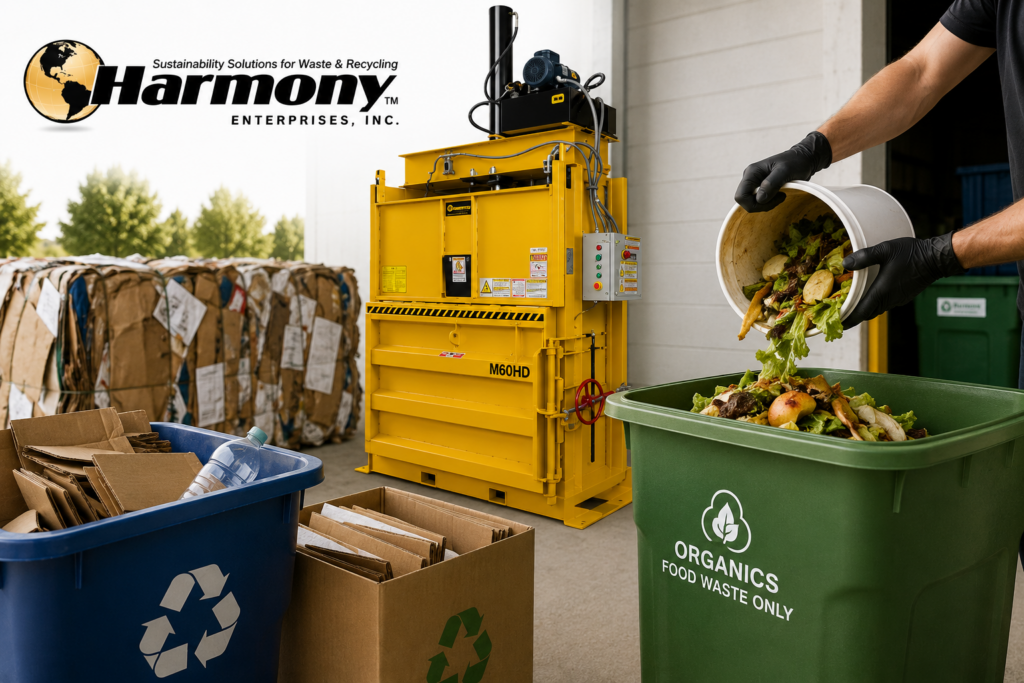
Organics diversion is the process of keeping biodegradable materials out of landfills by redirecting them into more productive uses. Depending on the material and available local infrastructure, these materials may be composted, processed through anaerobic digestion, donated for human consumption, or repurposed for agricultural uses such as animal feed.
The goal is simple: reduce landfill dependency while recovering as much value as possible from materials that would otherwise be discarded.
Looking Beyond the Environmental Benefits
While reducing greenhouse gas emissions remains an important benefit, many businesses first notice the operational advantages of diverting organic waste. Food waste is heavy, often requiring more frequent hauling and increasing disposal expenses. It also represents money already spent on purchasing, transportation, storage, labor, and preparation.
Understanding where that waste originates can help organizations identify opportunities to improve inventory management, reduce spoilage, and lower overall disposal costs.
Start with a Waste Audit
One of the most effective ways to improve any recycling or waste reduction program is to understand exactly what is entering the waste stream. A comprehensive waste audit provides valuable insight into the volume and types of materials being discarded while helping identify opportunities for diversion.
Many organizations discover that relatively simple operational changes can produce meaningful results, including:
- Separating food waste from recyclable materials.
- Improving employee education and collection practices.
- Reducing contamination in recycling containers.
- Increasing recovery of corrugated cardboard, plastics, and metal packaging.
- Optimizing collection schedules to reduce unnecessary hauling costs.
Even small improvements can lead to measurable savings while supporting broader sustainability goals.
Don’t Forget the Packaging
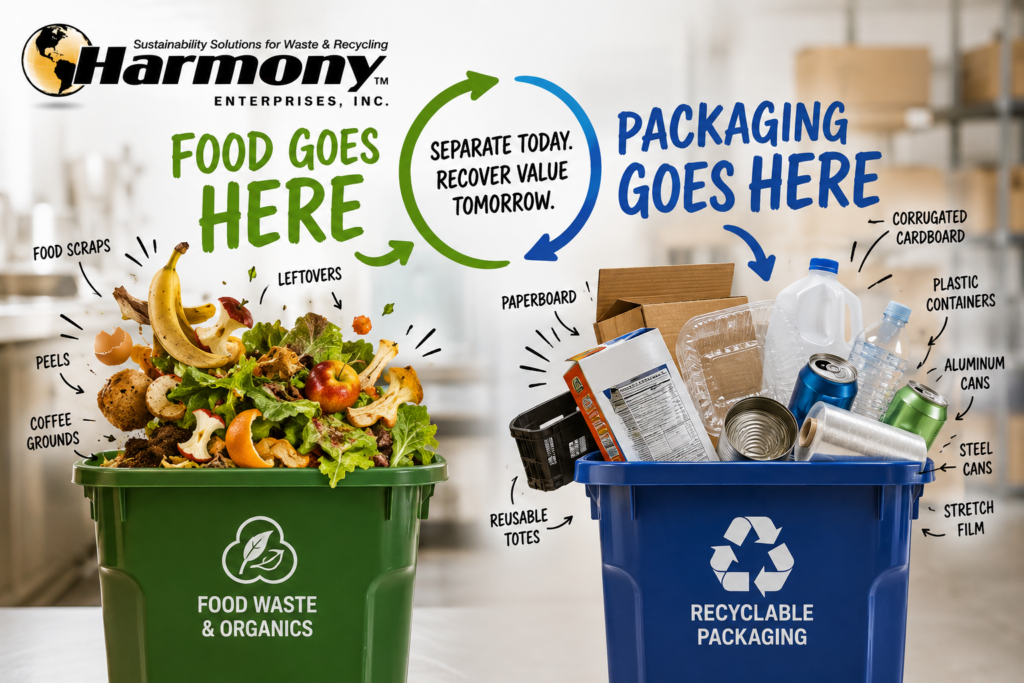 Although food waste itself may be composted or processed through an organics program, the packaging surrounding those products often remains recyclable. Corrugated cardboard, paperboard, PET and HDPE plastic containers, aluminum beverage cans, steel food cans, stretch film, and reusable totes may all have value when properly separated before disposal.
Keeping recyclable materials clean and free from food contamination improves commodity quality while helping processors and mills recover more usable material. Clean recyclables consistently command stronger demand than mixed or contaminated loads.
Building a Successful Organics Diversion Program
The most successful diversion programs combine thoughtful planning with consistent execution. Employee education, clearly labeled collection containers, contamination monitoring, and routine waste audits all play an important role in maintaining long-term success. Just as important is ensuring that waste and recycling equipment is properly sized for the facility and aligned with actual material volumes.
When these elements work together, organizations often experience lower hauling costs, cleaner facilities, improved recycling performance, and measurable progress toward sustainability objectives.
Market Insight
Food waste and organics diversion continue to gain momentum as businesses, institutions, and municipalities seek practical ways to reduce landfill dependence and improve resource recovery. Organizations that understand their waste streams are better positioned to recover recyclable materials, improve operational efficiency, and prepare for evolving sustainability expectations.
The strongest programs look beyond food waste alone. They consider the entire waste stream—including recyclable packaging, employee practices, hauling frequency, and equipment needs—to create a more efficient and sustainable operation.
Contact Harmony Today!
Harmony Enterprises works with organizations across the globe to improve waste handling, increase recycling efficiency, and reduce disposal costs. Whether you’re evaluating your current waste stream or planning future sustainability initiatives, our team can help identify equipment solutions that support cleaner operations and long-term operational savings. Call us at (507) 886-6666 or fill out this simple form to contact us today!