Most operations do not have a hauling problem. They have a usage problem.
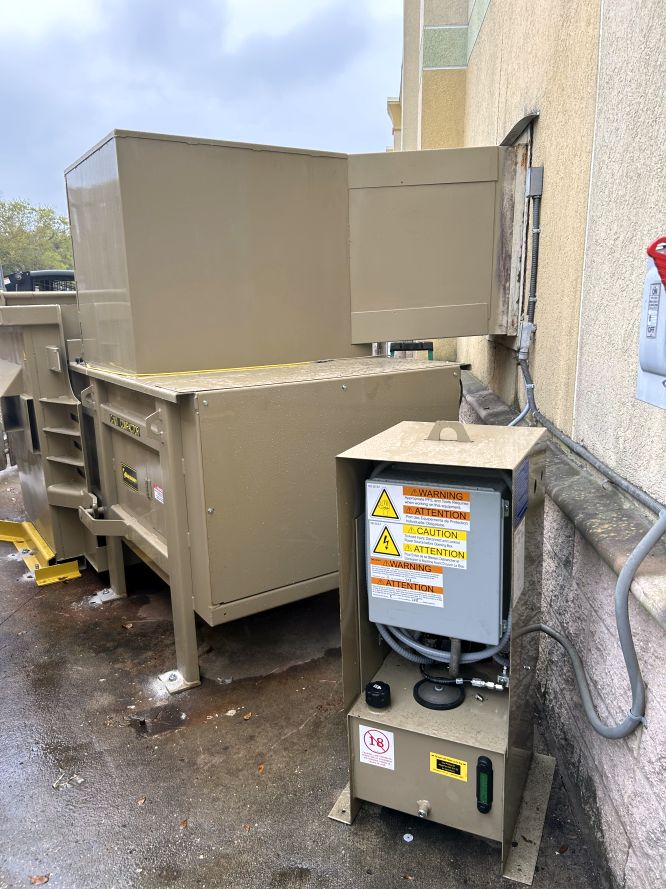 If your compactor is being pulled more often than expected, the immediate assumption is usually that the equipment is undersized. In reality, that is rarely the root cause.
More often, excessive hauling is driven by how the equipment is being used day to day. Load distribution, cycle timing, and how “full” is interpreted all play a significant role in overall efficiency.
What We See in the Field
Across facilities, a few patterns show up consistently:
- Material is loaded unevenly, creating air pockets
- Cycles are run too early, before true capacity is reached
- Containers appear full due to poor distribution, not actual volume
These small operational habits quietly drive up hauling frequency and cost.
How to Improve Compactor Efficiency
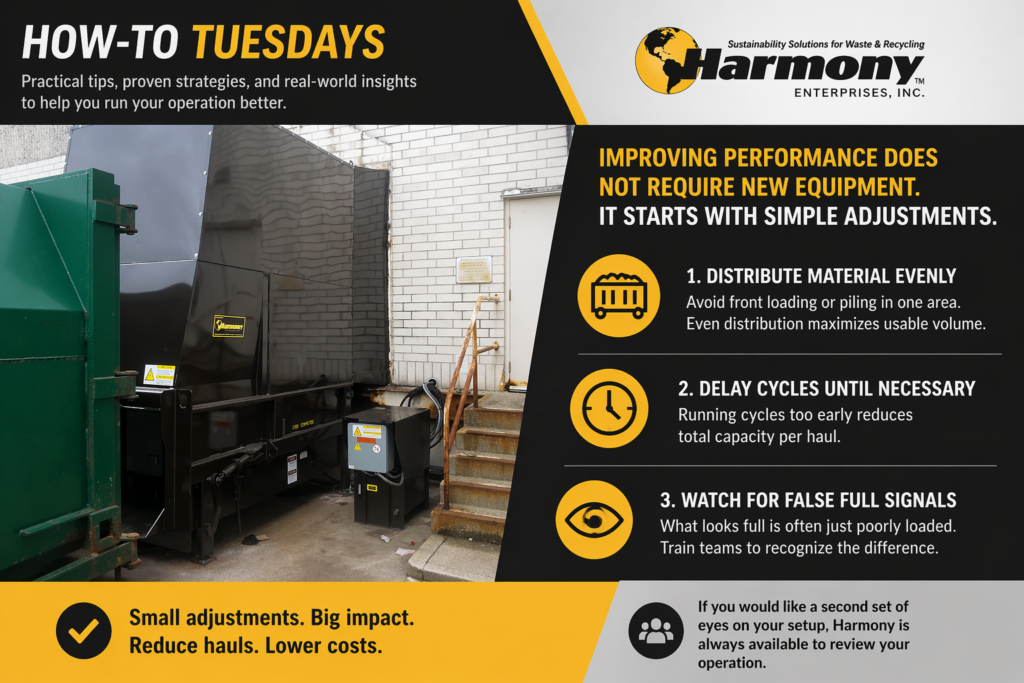 Improving performance does not require new equipment. It starts with simple adjustments:
Distribute Material Evenly
Avoid front loading or piling material in one area. Even distribution is one of the simplest and most overlooked ways to maximize container volume. When material is consistently loaded in the same spot, it creates dense buildup near the door while leaving unused space deeper in the container. This limits how far material can travel during compaction and reduces total capacity per haul.
An evenly loaded container allows each cycle to push material farther back, creating consistent density from front to rear and fully utilizing available space. In practice, this comes down to spreading material across the full width of the chamber, varying where loads are placed, breaking down bulky items, and taking a moment to visually check distribution before running a cycle. Small adjustments like these often lead to immediate gains without any changes to equipment.
Delay Cycles Until Necessary
Running cycles too early can reduce total capacity per haul. While more compaction does increase density, timing is what determines how much of the container is actually used. Compaction is most effective when the chamber is fully loaded.
Cycling too early means compressing partial loads, which creates dense layers with trapped air and limits the system’s ability to push material deeper into the container. It also increases the likelihood of uneven loading, bridging, and reaching pressure limits before the container is truly full. The most efficient approach is simple: load fully, then compact. Sequence drives performance.
Watch for False Full Signals
What looks full is often just poorly loaded. Containers frequently reach a point where material piles unevenly near the loading area, creating the appearance of being full while significant usable space remains deeper in the container. This leads to early pressure buildup and unnecessary hauls.
A truly full container shows even distribution from front to back, while a false full condition reveals mounding, gaps, or unused space. Training teams to recognize this difference is critical. By breaking down and spreading material during loading, avoiding repeated use of the same drop point, and checking distribution before cycling, operations can quickly correct these conditions. Cycles should be used after proper loading, not as a substitute for it.
Why This Matters
Reducing haul frequency is one of the fastest ways to lower operational costs. Fewer hauls mean lower transportation expenses, less disruption to daily operations, and better use of existing equipment. These improvements are often immediate once usage patterns change and teams begin operating with greater awareness of how the system is intended to perform.
Take a Closer Look at Your Operation
If hauling feels excessive, the answer may not be bigger equipment. It may be better visibility into how your current system is being used.
Harmony works with operations to identify these inefficiencies and improve performance without unnecessary capital investment.
If you would like a second set of eyes on your setup, we are always available to review your operation. Call us at (507) 886-6666 or Contact Us today!