Manufacturing Month: How Recycling Powers the Circular Economy
Week of October 5, 2026
October is National Manufacturing Month, making it the perfect time to recognize the vital connection between recycling and manufacturing.
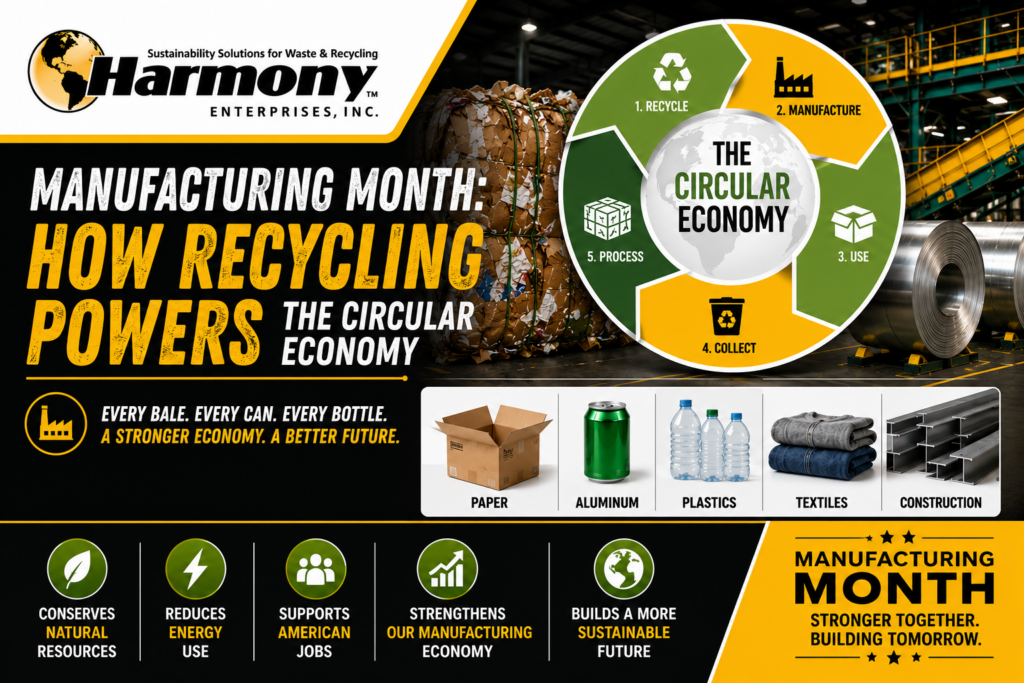
Every day, manufacturers across North America rely on recycled materials to produce new products. Recovered paper becomes corrugated boxes and packaging. Recycled aluminum is transformed into new beverage cans, automotive components, and building materials. Steel returns as appliances, vehicles, and structural products. Plastics are remanufactured into bottles, containers, textiles, and countless consumer goods.
This continuous cycle—collecting, processing, manufacturing, and recycling again—is known as the circular economy. Instead of sending valuable materials to landfills, the circular economy keeps resources in productive use for as long as possible, reducing the need for virgin raw materials while conserving energy and natural resources.
Businesses play an important role in this process. By properly separating recyclable materials, minimizing contamination, and investing in efficient waste handling equipment, organizations help strengthen domestic manufacturing while supporting more sustainable operations.
During Manufacturing Month, it’s worth remembering that every clean bale, every properly sorted load, and every successful recycling program contributes to a larger manufacturing supply chain that creates new products, supports American jobs, and keeps valuable resources in circulation.
Market Insight of the Week
Recycling doesn’t end with collection—it begins a manufacturing process.
Every cardboard bale, aluminum can, plastic bottle, and steel container recycled today becomes part of tomorrow’s products, helping power a stronger and more sustainable circular economy.
This Market Insight is provided for educational purposes only and reflects general industry information and publicly available resources. Manufacturing practices, recycled material usage, and recycling markets vary by industry, location, and end-market requirements. Organizations should consult their recycling provider or manufacturing partners for guidance specific to their operations.
Additional Resources
U.S. EPA – Sustainable Materials Management