Double Handling Material Leads To Lost Time and Money
Most operations do not realize how often material is being handled more than once, because these extra touches are built into the normal rhythm of the day. A pallet is staged for later, cardboard is collected in one area before being moved again, or material is set aside until someone has time to process it.
Individually, these actions seem harmless, but together they create a pattern that quietly increases labor, slows throughput, and introduces unnecessary complexity into the operation.
How Double Handling Happens
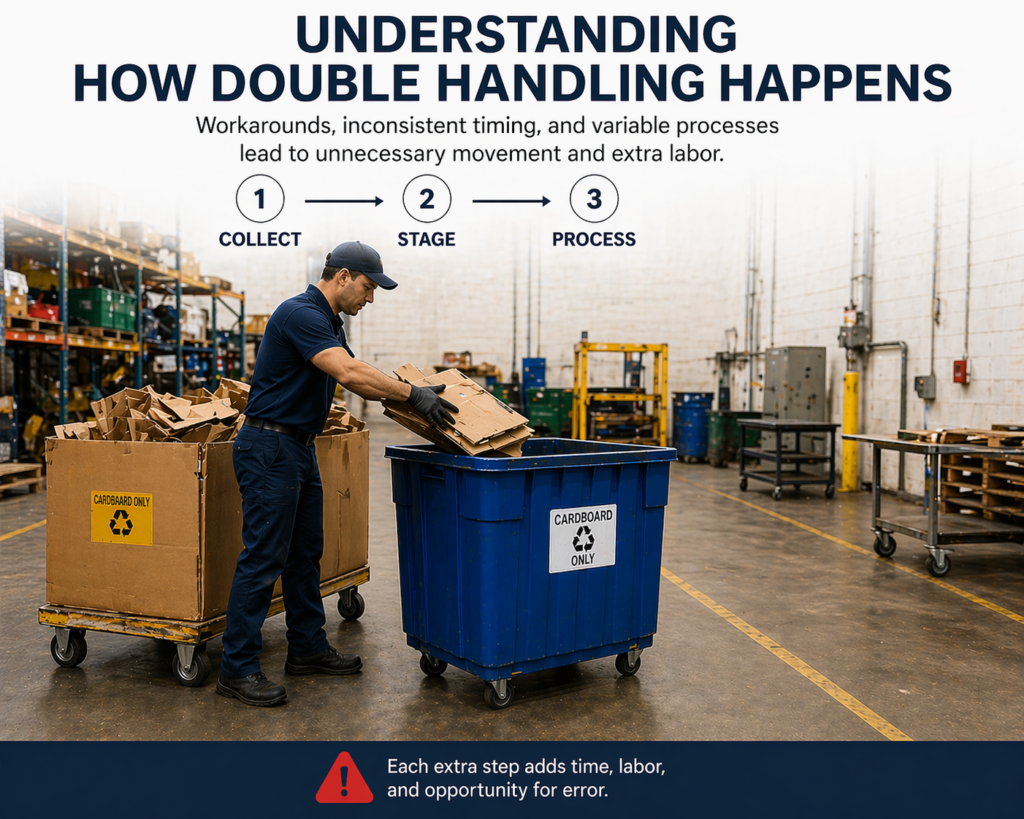 Double handling is rarely intentional and almost always a byproduct of how the operation is structured.
When layout does not support a direct path to equipment, teams create workarounds that involve staging and repositioning. When timing is inconsistent, material is set aside instead of being processed immediately. When expectations vary across shifts, each team develops its own approach, which often leads to repeated movement.
Over time, these habits become embedded in the workflow, even though they add effort without adding value.
How to Reduce Double Handling
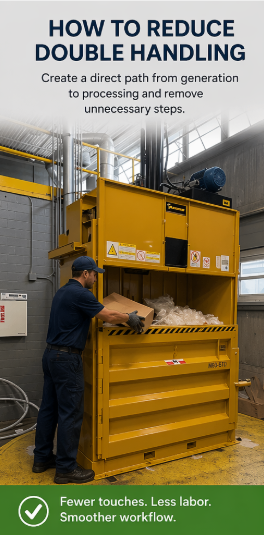 Improvement starts by observing how material actually moves through the space and identifying where unnecessary touches occur. When material consistently pauses before processing, it is often a sign that staging has become a substitute for flow.
In many operations, breaking down boxes becomes part of the routine, even though it adds time without adding value. Beyond the labor involved, it also introduces unnecessary risk, as repeated use of box cutter knives increases the likelihood of injury. When material can move directly to processing without being manually broken down and handled multiple times, both efficiency and safety improve in a way that is immediately noticeable.
Eliminating these pauses by aligning material movement with processing capacity can significantly reduce handling.
It is also important to establish consistent expectations across teams so that material follows the same path regardless of who is operating. When processes are standardized and clearly understood, variability decreases and repeated handling becomes less likely.
Where possible, the goal should be to move material once, process it, and complete the task without interruption, rather than allowing it to circulate through multiple steps.
Every Extra Touch Has a Cost
The impact of double handling is rarely captured in a single metric, but it shows up in the overall performance of the operation.
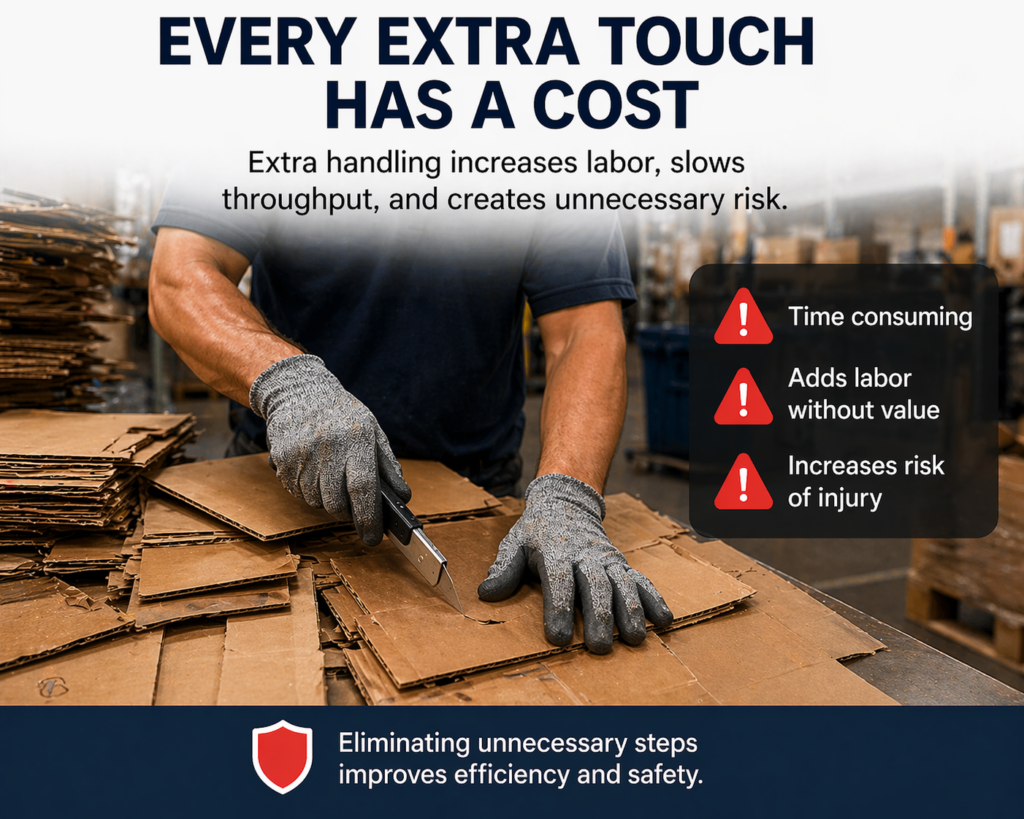 Each additional movement adds labor without increasing output, creates friction in the workflow, and increases the likelihood of errors or safety concerns. Over time, these inefficiencies compound, making the operation feel busy while limiting its effectiveness.
Reducing unnecessary handling does not just save time. It creates a smoother, more predictable process where effort is aligned with results.
Simplify the Path, Strengthen the Process
If your team is constantly moving material but struggling to keep pace, the issue is often not volume but how that volume is handled throughout the day.
By simplifying the path from generation to processing and removing unnecessary steps, operations can reduce labor demands, improve consistency, and create a more controlled environment.
Harmony works with facilities to evaluate material flow and identify where extra handling can be eliminated, often without requiring additional equipment or major changes to the space.
If you would like a second perspective on your operation, we are always available to help.