Far UVC & PRRS Risk: Rethinking Biosecurity Inside the Barn
Porcine Reproductive and Respiratory Syndrome (PRRS) continues to be one of the most costly and persistent challenges in hog production. For many operations, it is not a question of if exposure will occur, but when, and how severe the downstream impact will be on herd health, productivity, and overall system stability.
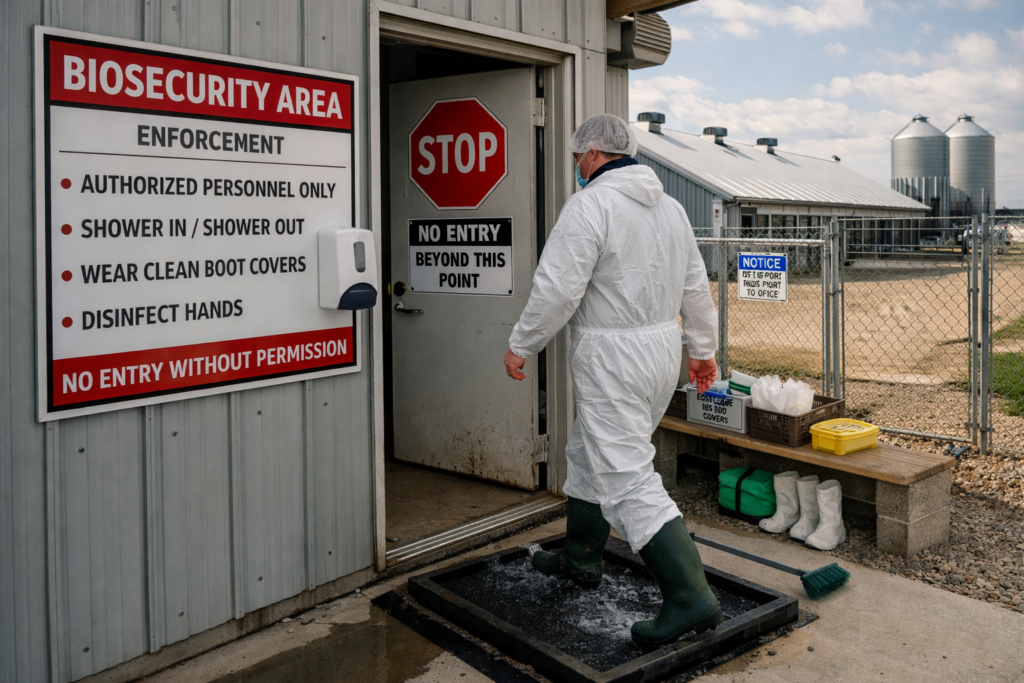 Over time, the industry has made meaningful progress in PRRS biosecurity in hog barns. Perimeter controls have tightened. Entry protocols have improved. Filtration systems have become more common in higher risk environments. Yet even with these advancements, PRRS and other airborne pathogens continue to find pathways into production systems.
The reason is not a failure of effort. It is a limitation of where most biosecurity strategies stop.
Biosecurity Has Traditionally Focused on the Perimeter
Most current protocols are designed to prevent introduction. They are built around controlling what comes into the system, including animals, people, equipment, and air. These measures are essential and should remain foundational.
However, once inside the barn, the environment changes.
Air is shared. Movement is constant. Animals, people, and workflows create ongoing circulation. In this setting, the challenge is no longer just preventing entry. It becomes managing exposure within a dynamic, occupied space.
This is where many systems remain vulnerable.
The Gap: Continuous Protection Inside Occupied Spaces
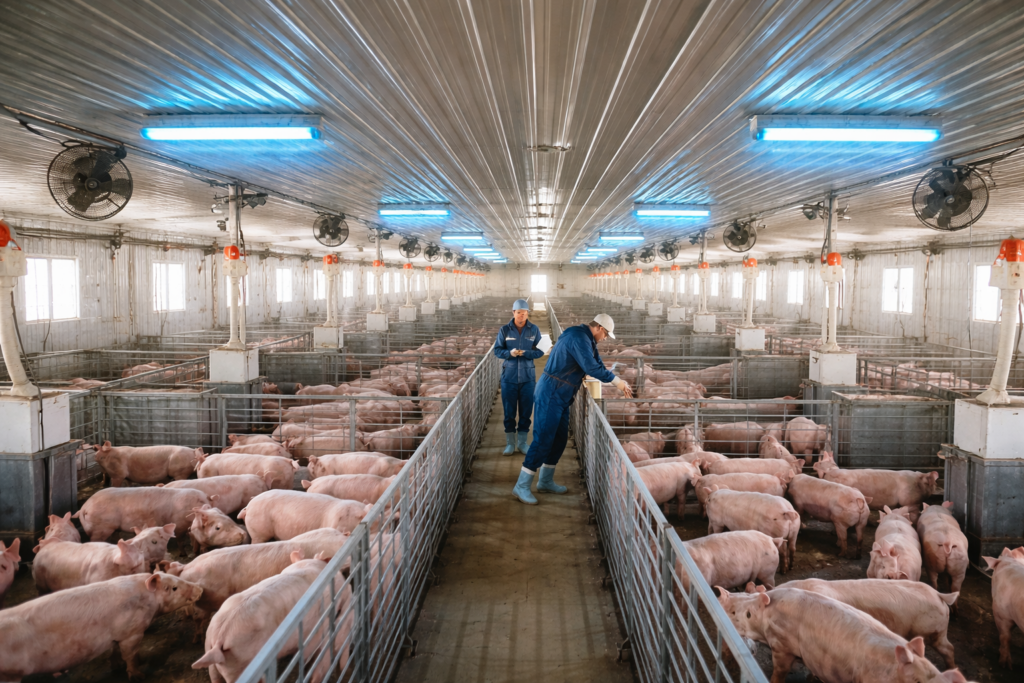 Even in well managed operations, there are moments where risk is elevated. Routine activity, maintenance, animal movement, and human presence all introduce variables that are difficult to fully control.
Traditional tools are not designed for continuous use in occupied environments. As a result, there is often a gap between prevention at the perimeter and protection within the barn.
This gap represents an opportunity to rethink how biosecurity is approached, not as a single barrier, but as a layered system.
Introducing a New Layer: Far UVC Technology
Far UVC light, typically in the 222 nanometer range, has emerged as a technology capable of inactivating airborne pathogens while remaining safe for use in occupied spaces when properly applied.
Unlike conventional UV systems, which require unoccupied conditions or shielding, Far UVC offers the potential for continuous operation. This allows it to function as an always on layer of protection, working in the background as daily operations continue.
In the context of hog production, this introduces a fundamentally different approach. Instead of relying solely on preventing pathogens from entering, producers can begin to address how airborne exposure is managed within the barn itself.
Positioning Far UVC Within Existing Biosecurity Strategies
It is important to be clear about what this technology is, and what it is not. Far UVC is not a replacement for filtration, protocols, or best practices. It is a complementary layer designed to strengthen the overall system.
When integrated correctly, it supports existing efforts by:
- Addressing airborne pathogen presence in real time
- Reducing the potential for spread within shared airspace
- Operating continuously without disrupting daily workflows
This layered approach aligns with how other high consequence industries manage risk. Redundancy is not inefficiency, it’s resilience.
From Theory to Application
As with any emerging technology, adoption depends on practical results. Early implementations in controlled environments have demonstrated the ability of Far UVC to inactivate airborne pathogens. In agricultural settings, the focus shifts to how that capability translates into real world outcomes.
Producers are increasingly asking questions that go beyond compliance and toward performance. What reduces variability. What supports herd health. What protects against costly disruptions.
These are operational questions, not theoretical ones.
A Shift in How PRRS Biosecurity In Hog Barns Is Defined
The future of biosecurity in hog production will likely not be defined by a single solution, but by how effectively multiple layers work together.
Perimeter controls will remain critical. Protocols will continue to evolve. At the same time, technologies that address in barn conditions will play a larger role in closing existing gaps.
Far UVC represents one of the first viable tools that can operate continuously within occupied environments. That alone makes it worth serious consideration as part of a broader herd health strategy.
Recognized Industry Perspective on PRRS as an Operational Risk
The conversation around PRRS is evolving. While it has traditionally been viewed through a herd health lens, forward thinking operations are beginning to recognize its broader operational impact, from labor disruption and production variability to long term cost exposure.
This shift is gaining traction across the industry. Harmony’s perspective on PRRS as both a health and operational challenge was recently featured in National Hog Farmer, highlighting the need for more proactive, systems based approaches to biosecurity.
Rather than relying solely on reactive measures, producers are exploring continuous mitigation strategies that address airborne transmission risks within occupied spaces. Technologies like Far UVC are part of this next phase, supporting more stable environments without interrupting daily workflows.
Read the full article on National Hog Farmer to see how this perspective is shaping industry thinking.
Moving Forward
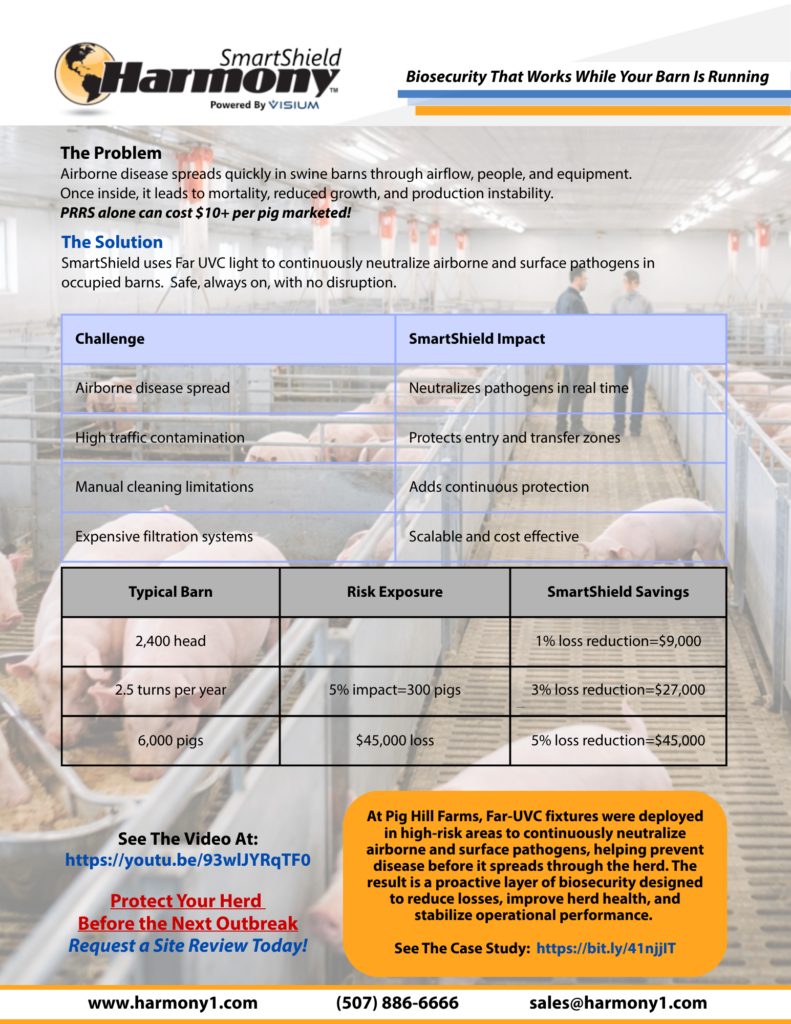 For producers evaluating next steps, the conversation is not about replacing what already works. It is about identifying where exposure still exists and how it can be reduced.
Biosecurity is no longer just about keeping threats out. It is about managing risk at every point in the system, including the air animals and people share every day.
That shift, from perimeter only thinking to continuous protection, may define the next phase of advancement in hog production.
To learn more about Far UVC technology and Harmony’s Smartshield powered by Visium, always on bio-protection, call us at (507) 886-6666 or contact us today!