The Complete Industry Buyer’s Guide to Waste & Recycling Equipment
Key Takeaways:
-
Effective waste and recycling equipment selection begins with understanding your waste stream, facility constraints, and operational priorities.
-
The decision between balers and compactors depends on whether the goal is recovering recycling value or controlling waste volume and sanitation.
-
Matching equipment type and scale to space, throughput, and workflow is critical to long term performance and ROI.
-
Build quality, service support, and the ability to monitor and adapt equipment over time significantly impact total cost of ownership.
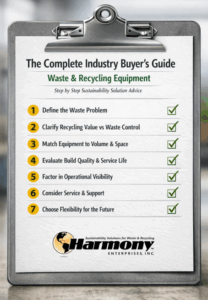
Step x Step Sustainability Solution Advice from Harmony Enterprises:
Selecting waste & recycling equipment is not an abstract planning exercise. It is a practical decision that directly affects operating costs, labor efficiency, safety, sanitation, and sustainability performance. Facilities that take a disciplined, criteria driven approach to equipment selection are far more likely to see measurable returns. Those that do not often inherit avoidable constraints that persist for years.
This buyer’s guide is designed as a working reference for facility leaders, operations teams, and sustainability professionals who are actively evaluating equipment options. Drawing on decades of field experience and a portfolio of more than forty long lasting balers & compactors, Harmony Enterprises helps organizations move from uncertainty to confident decision making.
Step One: Define the Waste Problem You Are Solving
 Before evaluating equipment types or models, it is critical to clearly define the operational problem. Many purchasing challenges stem from jumping to a solution before understanding the waste stream itself.
A practical waste stream assessment focuses on current reality, not assumptions. This includes identifying the materials generated, the frequency and volume of disposal, the labor required to manage waste today, and the physical constraints of the facility. Floor space, door clearances, traffic flow, sanitation requirements, and hauling schedules all influence what equipment will perform effectively.
When these factors are documented upfront, equipment selection becomes a matter of fit rather than guesswork.
Step Two: Determine Whether the Goal Is Recycling Value or Waste Control
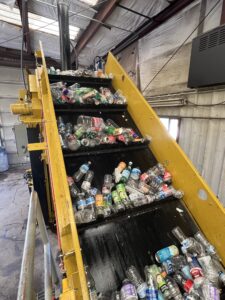 The next decision point is not size or brand. It is intent.
Facilities seeking to recover value from recyclable materials typically require balers. These systems are designed to create dense, uniform bales of materials such as OCC, plastics, aluminum, textiles, foam, and select packaging materials. Baling supports cleaner storage, fewer hauls, and participation in recycling programs that can offset operating costs. It is important for business operators who want to recycle to make sure there is a local recycler willing to pick up their commodities, find out what they pay for these items, and what bale size requirements they might have for stacking and transport.
Facilities focused on controlling general waste, mixed materials, or food waste typically require compactors. Compactors reduce volume, contain odors, limit pest activity, and improve site cleanliness. They are especially effective in outdoor locations, high traffic areas, and sanitation sensitive environments.
Clarifying this objective early simplifies every decision that follows.
Step Three: Match Equipment Type to Volume and Space
Once the category is defined, the focus shifts to scale and layout.
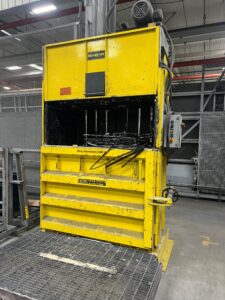
Vertical balers are commonly selected for retail, grocery, warehouse, and back room applications where space is limited and volumes are moderate. They offer a cost effective way to implement recycling without significant footprint demands.
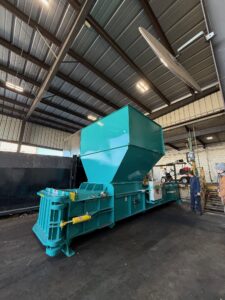 Horizontal balers are designed for higher throughput and continuous operation. They are typically used in large distribution centers, manufacturing facilities, and recycling operations where material flow is constant. Many times, these solutions are paired with integrated conveyor or tipper options, to optimize efficiency.
Compactors follow a similar logic. Stationary compactors are well suited for dry waste streams, while self contained compactors address wet waste and sanitation concerns. Stainless steel compactors support environments with strict cleanliness standards, and automatic front of house compactors provide discreet solutions for public facing spaces.
At this stage, equipment selection becomes a matter of alignment rather than exploration.
Step Four: Evaluate Build Quality & Service Life
Waste handling equipment is expected to perform reliably for many years. Evaluating durability requires looking beyond capacity ratings and focusing on how the equipment is built.
 Frame construction, weld quality, hydraulic system design, platen force consistency, and safety controls all influence long term performance.
Equally important are the practical considerations that support uptime, including documentation quality, parts availability, and access to knowledgeable service support.
Harmony balers & compactors are engineered for extended service life and are deployed across demanding environments where reliability is nonnegotiable.
Step Five: Factor in Operational Visibility
Modern facilities benefit from knowing how equipment is being used, not just that it is running. Monitoring tools provide insight that helps reduce hauling, improve maintenance planning, and minimize downtime.
Systems such as Harmony’s Insite Monitoring System allow facilities to track container fullness, cycle counts, power status, and service alerts. This information supports better scheduling, fewer unnecessary trips, and more predictable operating costs.
In a buyer’s evaluation, monitoring should be viewed as an operational efficiency tool that enhances the value of the equipment over time.
Step Six: Consider Support as Part of the Investment
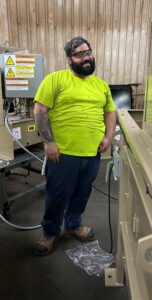 Equipment selection does not end at installation. Long term performance depends on the quality of service and support behind the machine.
Buyers should evaluate warranty terms, service coverage, parts access, and the clarity of manuals and safety documentation.
Strong support infrastructure turns equipment into a dependable asset rather than a recurring concern.
Step Seven: Choose Flexibility Over Fixed Solutions
Facilities change. Packaging evolves, volumes increase, layouts shift, and sustainability expectations grow. Equipment strategies should allow for adaptation rather than lock facilities into rigid configurations.
Harmony’s broad portfolio enables scalable solutions that can expand or adjust as needs change. This flexibility protects the original investment and supports long term operational stability.
Why Harmony Enterprises Is a Trusted Equipment Partner
Harmony Enterprises delivers more than individual machines. With one of the widest selections of balers & compactors in the industry, integrated monitoring technology, service management, and energy optimization solutions, Harmony provides end to end waste handling strategies tailored to real operational needs.
This buyer focused approach helps facilities make informed decisions, reduce risk, and implement equipment solutions that perform consistently and predictably over time.
 Frequently Asked Questions
How do I know whether I need a baler or a compactor?
The decision depends on whether your primary goal is recovering value from recyclable materials or controlling general waste volume and sanitation. Balers are designed for recyclable materials such as cardboard and plastics, while compactors are better suited for mixed waste and food waste.
What information should I gather before selecting waste or recycling equipment?
Facilities should assess their waste streams, material volumes, available space, traffic flow, labor requirements, and hauling schedules. Understanding these factors upfront helps ensure equipment is properly matched to operational needs.
What is the difference between vertical and horizontal balers?
Vertical balers are commonly used in locations with limited space and moderate material volumes, such as retail and back-of-house operations. Horizontal balers are designed for higher throughput environments like distribution centers and manufacturing facilities where material flow is continuous.
When should a facility choose a stationary compactor versus a self-contained compactor?
Stationary compactors are typically used for dry waste streams, while self-contained compactors are designed for wet waste and environments where sanitation and leak prevention are critical.
How important is service and support when selecting equipment?
Service support is a critical part of the investment. Equipment longevity, uptime, and total cost of ownership are strongly influenced by parts availability, documentation quality, and access to knowledgeable service technicians.
Can waste and recycling equipment be adapted as facility needs change?
Yes. Scalable and flexible equipment solutions allow facilities to adjust to changes in volume, packaging types, and sustainability goals without replacing entire systems.
If you would like more specific information on a thorough approach to acquiring your next baler or compactor, or have questions about leasing, renting, or used equipment, please call us at (507) 886-6666 or Contact Us today!