Understanding the Term Densifier
In the recycling and waste industry, terminology often evolves faster than the equipment itself. One term that continues to gain traction in search and in conversation is “densifier.” It is frequently used to describe equipment that reduces material volume, but like many industry terms, it can oversimplify what is actually happening inside an operation.
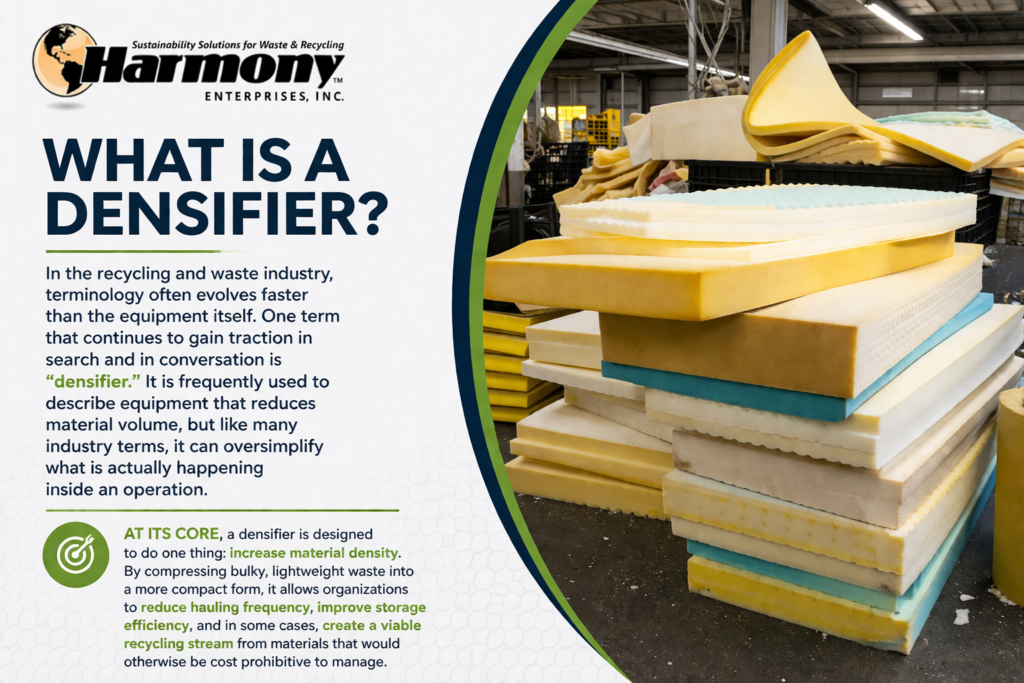 At its core, a densifier is designed to do one thing: increase material density. By compressing bulky, lightweight waste into a more compact form, it allows organizations to reduce hauling frequency, improve storage efficiency, and in some cases, create a viable recycling stream from materials that would otherwise be cost prohibitive to manage.
Why Densifiers Are Commonly Used for Foam
The term is most commonly associated with foam, particularly Expanded Polystyrene (EPS), where the challenge is obvious. Large volumes of material consist primarily of air, making transportation inefficient and expensive. Densifiers address this by compressing foam into dense blocks or logs that are significantly easier to handle and ship. In these applications, the value is clear and well established.
Densification Is an Outcome, Not a Machine
However, focusing only on the machine can lead to a narrow understanding of the broader opportunity. Densification is not a specific type of equipment. It is an outcome. The real question for most operations is not whether densification is needed, but how it should be achieved based on the material being processed and the result that is desired.
Foam Densifiers and Foam Balers Solve the Same Problem Differently
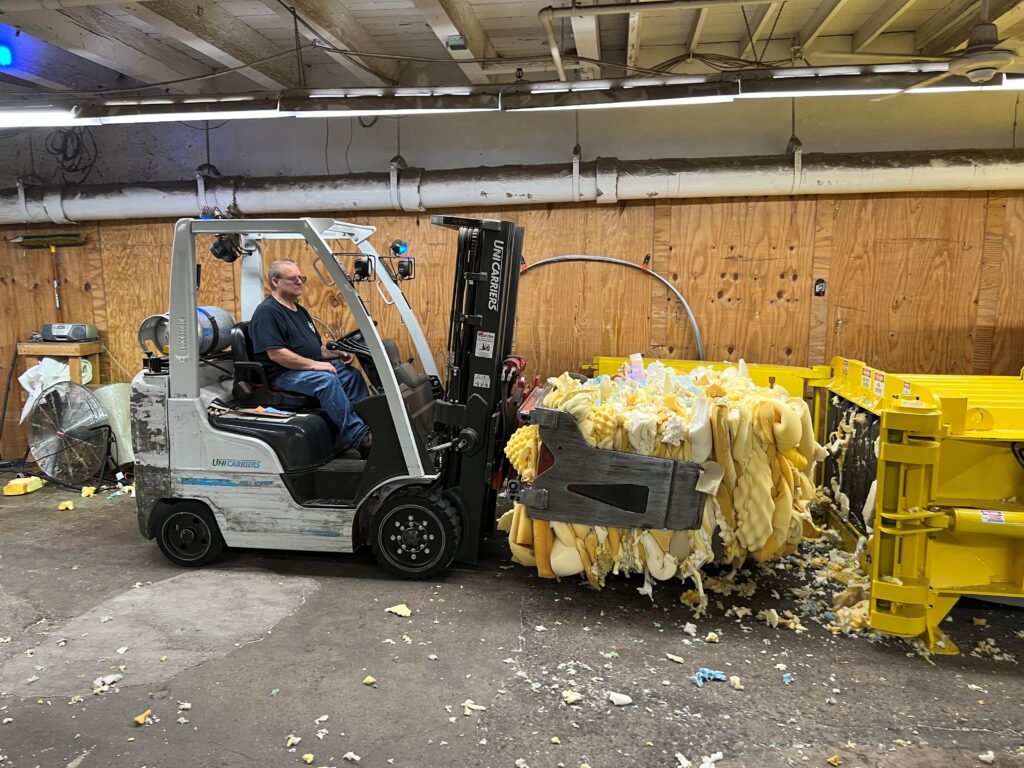 For foam applications, densifiers are one effective approach, but they are not the only one. Horizontal balers designed to handle foam can achieve a similar outcome through a different method, producing uniform, stackable bales that integrate more naturally into operations already processing corrugated, plastics, or other recyclables. In higher volume environments or facilities managing multiple material streams, this approach can offer advantages in workflow consistency and downstream handling.
Neither method exists to replace the other. They reflect different ways of solving the same fundamental challenge. The distinction becomes even more important when the material stream introduces additional variables beyond simple volume.
When Volume Reduction Alone Is Not Enough
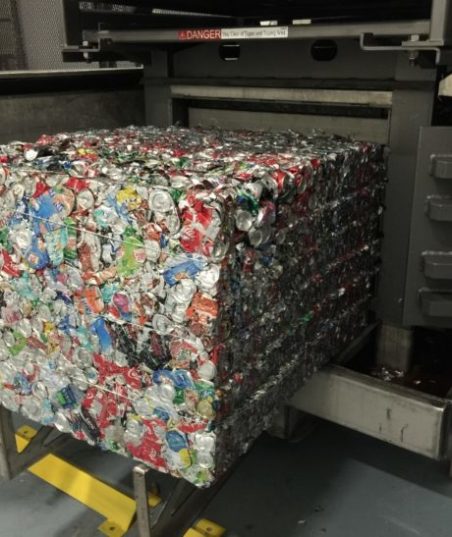 Liquid filled containers are a common example of when volume reduction is not enough on its own. While they can be compressed, doing so without addressing the residual contents often creates downstream complications. Trapped liquids can impact bale quality, increase handling complexity, and reduce the overall value of the material. In these situations, densification alone does not fully solve the problem.
This is where the concept begins to evolve beyond traditional definitions. Systems that combine perforation, extraction, and compression take densification a step further by not only reducing volume, but also improving material quality and usability. By removing liquids prior to compaction, these liquid extraction balers produce a cleaner, more consistent output that aligns more closely with recycling and operational goals.
Choosing the Right Densification Strategy
What becomes clear is that densification is not a single decision point. It is part of a broader material handling strategy. Foam densifiers, horizontal balers, and advanced extraction systems all contribute to that strategy in different ways, depending on the nature of the material and the objectives of the operation.
For organizations evaluating their options, the most effective approach is to step back from the terminology and focus on outcomes. What challenges are being solved beyond volume reduction? How is the material being handled before and after processing? What level of consistency and value is expected from the output?
Answering those questions often leads to a more nuanced solution, one that may involve a densifier, a baler, or a system that extends beyond both.
Densification, in all its forms, remains a critical part of improving efficiency and reducing cost in modern recycling operations. The difference lies in how it is applied and how completely it addresses the realities of the material stream.
Take the Next Step Toward Smarter Material Handling
If you are currently evaluating densifiers, foam balers, or looking for a more effective way to manage bulky or liquid filled materials, the right answer starts with a clear understanding of your material stream. A structured review of how materials move through your operation often uncovers opportunities to reduce hauling, improve consistency, and increase overall material value.
The Harmony team works directly with operations to assess these variables and recommend solutions aligned to both operational performance and long term sustainability goals. Call us today at (507) 886-6666 or fill out this simple form at to contact us today!