Vertical Baler FAQs
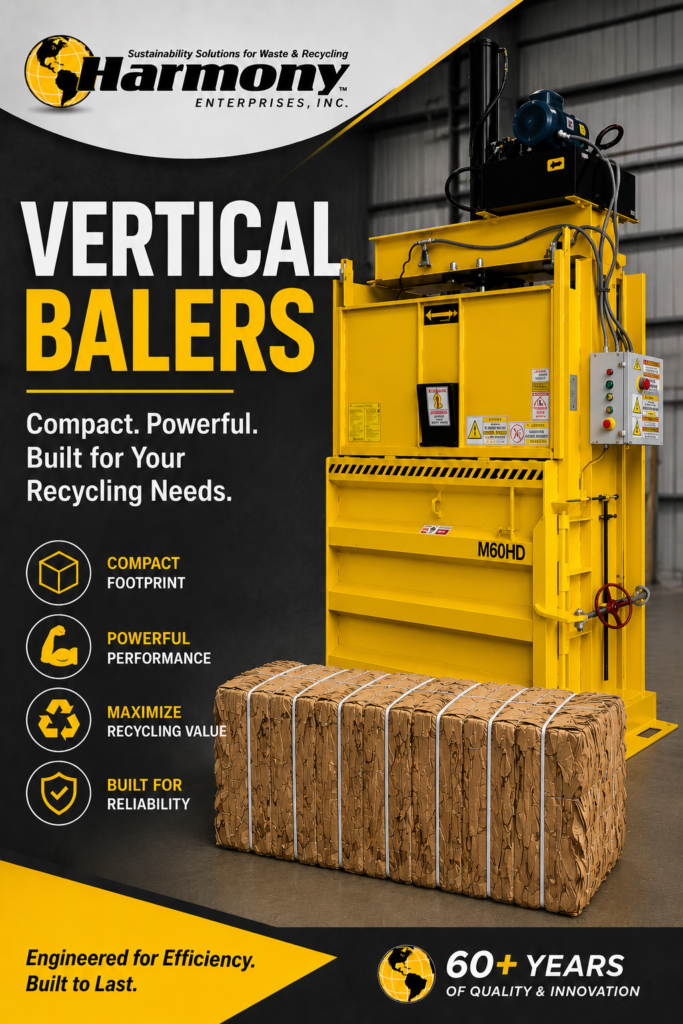
Vertical balers have become one of the most widely used recycling solutions for businesses looking to reduce waste volume, improve workplace organization, and generate additional value from recyclable materials. From neighborhood grocery stores and retail locations to hospitals, warehouses, manufacturers, schools, distribution centers, and municipal facilities, organizations across virtually every industry rely on vertical balers to simplify recycling operations while lowering overall waste management costs.
A vertical baler compresses recyclable materials such as corrugated cardboard (OCC), mixed paper, PET plastic bottles, HDPE containers, aluminum cans, steel cans, textiles, and other approved commodities into dense, uniform bales that are easier to store, transport, and market for recycling. Rather than allowing recyclable materials to accumulate in dumpsters or occupy valuable floor space, a baler transforms loose materials into organized, manageable bales that help improve housekeeping while reducing collection frequency.
Selecting the right vertical baler involves much more than choosing a machine based on price. Recycling volume, available floor space, loading requirements, bale size, electrical service, employee workflow, safety considerations, and future growth all influence which model will deliver the greatest long-term value. A properly sized baler not only improves operational efficiency but can also reduce hauling costs, increase recycling revenue, and support sustainability initiatives throughout an organization.
This resource answers many of the most common questions businesses ask when researching commercial vertical balers. Whether you’re purchasing your first baler, replacing an older machine, or expanding an existing recycling program, you’ll find practical information to help you evaluate equipment, compare options, and make a confident purchasing decision.
What Is a Vertical Baler?
A vertical baler is a hydraulic recycling machine designed to compress recyclable materials into dense, rectangular bales for easier storage, transportation, and recycling. Unlike trash compactors, which compress general refuse for disposal, vertical balers are specifically engineered to process recyclable commodities that retain value when properly separated and prepared.
Materials are manually loaded into the chamber through the front-loading door. A hydraulic ram then compresses the material repeatedly until the desired bale density is achieved. Once complete, the bale is secured with wire or strapping before being ejected from the machine for storage or shipment.
Vertical balers are commonly used to process corrugated cardboard, mixed paper, PET plastic bottles, HDPE containers, aluminum beverage cans, steel cans, textiles, foam packaging, and other approved recyclable materials. Because they occupy relatively little floor space while producing dense, manageable bales, they remain one of the most versatile recycling solutions available for commercial and industrial facilities. Certain larger vertical balers can produce mill-size bales.
Unlike larger horizontal balers, vertical balers are typically manually loaded and manually tied, making them ideal for organizations producing moderate volumes of recyclable materials rather than continuous, high-volume recycling streams.
Benefits of Vertical Balers
There are several key benefits to using long-lasting vertical balers. Here are just a few:
Reduce Waste Volume
Loose cardboard and recyclable materials occupy significantly more space than compressed bales. A vertical baler dramatically reduces storage requirements by compressing materials into dense, manageable bundles that are easier to stack, transport, and prepare for recycling. This not only improves housekeeping but also creates a cleaner and more organized work environment while reducing clutter around loading docks and storage areas.
Lower Hauling Costs
One of the greatest financial advantages of installing a vertical baler is reducing transportation costs. Compressing recyclable materials into dense bales allows organizations to store substantially more material before requiring pickup. Fewer collections often translate directly into lower hauling expenses while reducing vehicle traffic at the facility. Many businesses find that hauling savings alone justify investing in recycling equipment over time.
Increase Recycling Revenue
Properly prepared bales generally command greater value than loose recyclable materials. Mills and recycling processors prefer dense, consistent, contamination-free bales because they are easier to transport, handle, and process. While commodity prices fluctuate with market conditions, producing high-quality bales positions organizations to maximize the value of recyclable materials while supporting a more efficient recycling program.
Improve Workplace Safety
Cardboard stacked around dumpsters or loading docks creates slip hazards, fire risks, and unnecessary clutter. A vertical baler provides employees with a centralized location for managing recyclable materials while helping maintain cleaner work areas throughout the facility. Organized recycling practices also reduce unnecessary manual handling and improve overall operational efficiency.
Conserve Valuable Floor Space
Many facilities operate within limited space where every square foot matters. Vertical balers provide significant recycling capacity while maintaining a relatively compact footprint, making them ideal for grocery stores, healthcare facilities, retail operations, schools, hotels, and manufacturers. By converting loose recyclable materials into dense bales, facilities can reclaim storage space that would otherwise be occupied by overflowing cardboard and containers.
Support Sustainability Goals
Organizations across nearly every industry continue expanding sustainability initiatives to reduce landfill waste and improve recycling rates. Vertical balers help make these programs more successful by simplifying material collection, encouraging proper recycling practices, and producing cleaner recyclable commodities. A well-managed recycling program not only supports environmental goals but also demonstrates a measurable commitment to responsible resource management.
Choosing the Right Vertical Baler
Every recycling program is different, which means selecting the right vertical baler requires evaluating several operational factors beyond simply choosing the largest machine available.
Recycling Volume
The amount of recyclable material generated each day is often the single most important consideration. Small retail stores may require a compact baler capable of processing modest amounts of cardboard, while manufacturing facilities and distribution centers may benefit from larger chambers capable of producing heavier bales with fewer cycles.
Material Types
Different recyclable commodities behave differently during compression. Corrugated cardboard, mixed paper, plastics, textiles, aluminum cans, and steel cans each present unique handling characteristics. Understanding the primary materials your organization generates helps determine the most appropriate baler configuration.
Bale Size & Weight
Larger bales generally improve transportation efficiency and may increase recycling value, but they also require adequate storage space and suitable equipment for handling. Selecting an appropriate bale size should balance operational efficiency with available resources.
Available Floor Space
Vertical balers are well suited for facilities with limited space, but adequate clearance is still required for loading, servicing, bale removal, and safe operator access. Ceiling height, doorway dimensions, and loading dock configurations should all be considered during planning.
Electrical Requirements
Commercial vertical balers are available with different electrical requirements depending on model and application. Confirming available voltage, phase, amperage, and disconnect locations before installation helps avoid costly delays and ensures equipment is properly integrated into the facility.
Future Growth
Organizations should consider anticipated business growth, facility expansion, and changing recycling volumes when selecting equipment. Purchasing a baler with additional capacity today may eliminate the need for replacement as recycling programs continue expanding.
Vertical Baler Comparison
Although all vertical balers perform the same basic function—compressing recyclable materials into dense, manageable bales—not every model is designed for the same application. Recycling volume, available floor space, material type, desired bale weight, and operational workflow all influence which baler will deliver the best long-term performance.
- Evaluate both your average weekly recycling volume and predictable peak periods. This provides a more accurate picture of your long-term needs and helps prevent the equipment from becoming oversized, underutilized, or a bottleneck during busy periods.
- Cardboard is often the first material businesses choose to bale because it offers one of the quickest returns on investment. By reducing hauling frequency and producing cleaner, denser OCC bales, many facilities begin realizing measurable operational savings soon after installation.
- Before purchasing a vertical baler, think about more than just where the machine will sit. Plan for adequate space to load materials, remove finished bales, perform routine maintenance, and safely maneuver pallet jacks or forklifts. A well-planned layout improves both productivity and workplace safety.
- The value of a recycling program isn’t measured by how many bales you produce—it’s measured by how efficiently materials move through your operation. Proper employee training, consistent material separation, and routine housekeeping often have as much impact on program success as the equipment itself.
- Many facilities eventually recycle more than cardboard alone. If your organization expects to add plastics, paper, aluminum cans, textiles, or other recyclable commodities in the future, choosing equipment with the flexibility to accommodate multiple material types can protect your investment for years to come.
- A vertical baler is more than a waste reduction tool—it’s a workflow improvement. Facilities that consistently bale recyclable materials often experience cleaner work areas, better inventory control around loading docks, reduced fire hazards from accumulated cardboard, and a more organized recycling process from start to finish.
Rather than selecting equipment solely based on bale size or purchase price, organizations should evaluate the complete recycling process—from material generation and employee workflow to storage, transportation, and recycling revenue. A properly sized baler not only improves operational efficiency today but also provides room for future growth as recycling programs expand.
Frequently Asked Questions
The following questions represent many of the topics facility managers, recycling coordinators, operations leaders, and purchasing professionals ask when evaluating commercial vertical balers. Whether you’re comparing equipment, planning a new recycling program, or replacing an existing machine, these answers provide practical guidance to help you make an informed decision.
Ready to Find the Right Vertical Baler?
Harmony can evaluate your recyclable materials, available space, electrical service, bale requirements, and operational goals to help identify the right vertical baler for your facility.