Plastic Recycling Machines
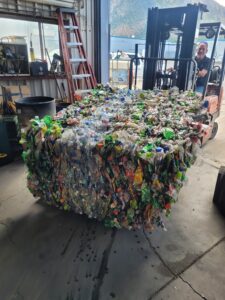 Plastic is everywhere in our daily lives—from packaging and household products to construction materials and medical devices. Because it isn’t readily biodegradable, plastic has become one of the most pressing environmental challenges of our time. This makes recycling more important than ever, and the technology behind it plays a critical role. Plastic recycling machines are central to this effort, helping collect, sort, compact, and prepare materials for reuse. Whether plastics are processed mechanically or chemically, these machines provide the foundation for turning waste into valuable resources.
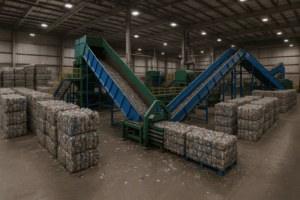 Here are some of the plastic recycling machines used in mechanical plastic recycling:
1. Shredders & Granulators
- Plastic Shredders: Break large plastic items (containers, pipes, car parts) into smaller chunks.
- Granulators: Further reduce plastics into small, uniform flakes or granules that are easier to wash and melt.
2. Wash Lines
- Friction Washers: Remove dirt, labels, and residues from plastic flakes.
- Float-Sink Tanks: Separate plastics by density (e.g., PET sinks, PE/PP floats).
- Hot Wash Systems: Use heated water and detergents to clean stubborn contaminants like glue or food residue.
3. Extruders
- Melt and reform cleaned plastic flakes into uniform pellets.
- Single-Screw Extruders: Common for general recycling.
- Twin-Screw Extruders: Better for mixing additives or handling mixed plastics.
4. Compactors & Densifiers
- Compress lightweight plastics (films, foam, bottles) into denser forms for easier handling and transport.
5. Injection & Blow Molding Machines (for reuse)
- Use recycled plastic pellets to make new products such as bottles, containers, or parts.
6. Specialized Equipment
- Air Classifiers: Separate plastic by weight.
- Optical Sorters: Use sensors to identify and separate plastics by resin type or color.
- Agglomerators: Process thin films and fibers into denser, reusable material.
-
Great question! Plastic pyrolysis is different from mechanical recycling—it chemically breaks down plastics into fuel (oil, gas, or char) through heating in the absence of oxygen. The process uses several types of machines and equipment working together in a system:
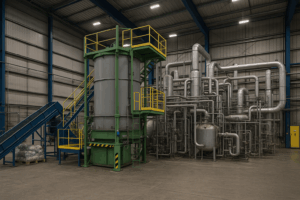 Chemical recycling
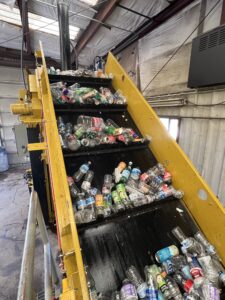 Recycling balers serve as the essential link between both mechanical and chemical recycling processes. Regardless of the final recycling method, plastics must first be collected, sorted, and compacted into dense, manageable bales. These baled plastics can then be easily stacked and transported to specialized facilities. By reducing volume and standardizing the material for shipment, balers make the logistics of recycling far more efficient and cost-effective.
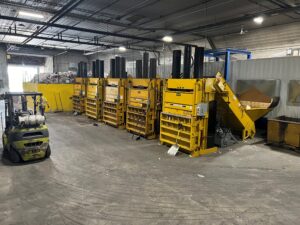 There are two types of plastic recycling machines, vertical and horizontal. The one you need depends on several factors like the type and volume of the plastic being recycled, how it needs to be fed into the baler (manually or automated like a conveyor, hopper, or tipper), available operational space, power supply, and budget.
At Harmony Enterprises, we understand the critical role recycling plays in building a more sustainable future. As a fifth-generation, family-owned manufacturer of plastic recycling machines, we’ve dedicated decades to designing and delivering balers that make recycling simpler, more efficient, and more cost-effective. Whether you’re managing plastics for mechanical or chemical recycling, our equipment provides the reliability and performance you need. Call us today at 507-886-6666 or reach out through our contact page at https://harmony1.com/contact/ to learn how Harmony can help your business recycle better.