Horizontal Baler FAQs
Horizontal balers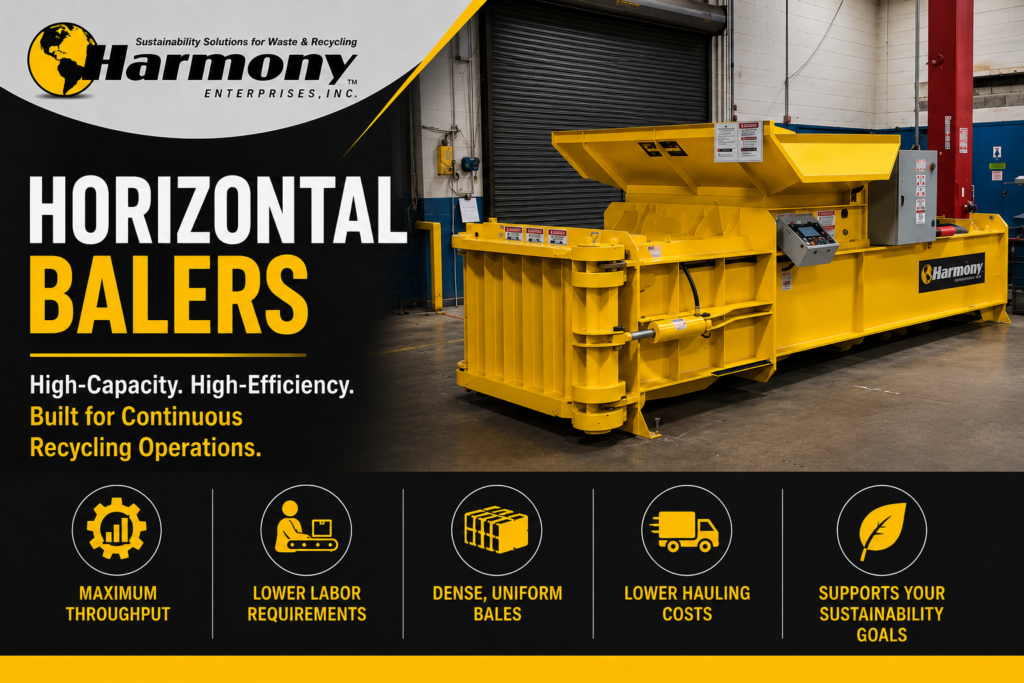 are often the preferred recycling solution for organizations that generate large volumes of recyclable materials and require high-capacity processing. Depending on their configuration, horizontal balers can provide continuous or semi-continuous material processing, greater automation, higher throughput, and reduced labor requirements compared with most manually loaded vertical balers.
Manufacturing facilities, distribution centers, recycling processors, warehouses, large retailers, paper converters, fulfillment centers, and material recovery facilities (MRFs) commonly rely on horizontal balers to efficiently manage corrugated cardboard, mixed paper, plastics, shrink wrap, textiles, aluminum cans, steel cans, and other recyclable commodities. Their ability to produce dense, mill-sized bales while minimizing operator involvement makes them an ideal solution for facilities where recycling is an ongoing part of daily operations.
Horizontal balers are available in several configurations, including manual-tie, semi-automatic, and fully automatic models, as well as open-end and closed-end designs. Selecting the right equipment depends on factors such as recycling volume, material type, available floor space, conveyor integration, staffing, and long-term operational goals.
This guide answers the most common questions about commercial horizontal balers, explains how they differ from vertical balers, and provides practical information to help businesses determine whether a horizontal baler is the right investment for their recycling program.
What Is a Horizontal Baler?
A horizontal baler is a hydraulic recycling machine that compresses recyclable materials into dense, rectangular bales using horizontal compression rather than the vertical compression found in traditional vertical balers. These machines are specifically designed for organizations generating medium to very large volumes of recyclable materials and are commonly integrated into continuous production environments where efficiency, automation, and throughput are priorities.
Material is loaded into the machine through a hopper or conveyor-fed infeed system before being compressed by a powerful hydraulic ram. As additional material enters the chamber, the ram continues compacting the recyclables into a dense bale. Depending on the baler design, finished bales may be manually tied, semi-automatically tied, or fully tied using automatic wire-tying systems before being ejected from the machine.
Horizontal balers are capable of processing a wide variety of recyclable commodities, including corrugated cardboard (OCC), mixed paper, office paper, PET bottles, HDPE containers, aluminum cans, steel cans, textiles, foam packaging, shrink wrap, and many other approved materials. Models configured for continuous or conveyor-fed loading are particularly well suited for manufacturing facilities, warehouses, distribution centers, recycling processors, and large retail operations that generate recyclable materials throughout the day.
Unlike trash compactors, which compress waste destined for disposal, horizontal balers prepare recyclable materials for recovery and resale. Their ability to produce consistent, high-density bales improves storage efficiency, reduces transportation costs, and helps maximize the value of recyclable commodities.
Benefits of Horizontal Balers
There are several important benefits to using a horizontal baler for your business. Here are just a few:
Higher Throughput
Many open-end and automatic-tie horizontal balers are engineered for continuous operation, making them ideal for facilities where recyclable materials are generated throughout the day. Conveyor-fed systems allow cardboard, paper, plastics, and other recyclables to be processed with minimal interruption to production. Instead of waiting for a chamber to be filled manually, materials flow directly into the machine, significantly increasing processing capacity compared to manually loaded equipment.
Reduce Labor Requirements
Automation is one of the greatest advantages of a horizontal baler. Conveyor-fed loading systems, automatic compression cycles, and optional automatic wire-tying systems reduce the amount of manual handling required by employees. Rather than spending time transporting materials to a baler, operators can continue performing higher-value tasks while recyclable materials are processed automatically.
Produce Dense, Uniform Bales
Consistency is important when marketing recyclable materials. Horizontal balers produce dense, uniform bales that are easier to stack, transport, and handle throughout the recycling process. Many recycling processors and paper mills prefer consistent bale dimensions because they simplify storage, shipping, and processing while helping maximize trailer payloads.
Lower Transportation Costs
Heavier, denser bales allow organizations to transport more recyclable material with fewer shipments. By reducing the amount of air contained within loose materials, horizontal balers improve trailer utilization and help lower hauling expenses. Fewer pickups also reduce vehicle traffic around the facility and contribute to a more efficient recycling program.
Integrate With Production Operations
Horizontal balers are designed to become part of the overall production workflow rather than a separate recycling station. They can often be integrated with conveyors, sorting systems, shredders, air collection systems, and automated packaging lines to create seamless material handling processes that require little operator intervention.
Support Long-Term Sustainability Goals
High-volume recycling programs play an important role in reducing landfill waste and improving resource recovery. Horizontal balers help organizations recover more recyclable material while maintaining cleaner work areas and improving operational efficiency. For businesses focused on sustainability initiatives, they provide an effective way to support environmental goals while reducing waste management costs.
Choosing the Right Horizontal Baler
Selecting the right horizontal baler requires a thorough understanding of your facility’s recycling program, production processes, and long-term operational goals.
Recycling Volume
Daily and weekly recycling volumes are often the primary factor when determining equipment size. Facilities generating continuous streams of cardboard, paper, or plastic generally benefit from horizontal balers because they eliminate bottlenecks associated with manual loading.
Material Types
Different recyclable commodities compress differently. Understanding whether your facility primarily processes OCC, mixed paper, plastics, textiles, aluminum cans, or multiple commodities helps determine the most appropriate baler configuration.
Manual Tie or Automatic Tie
Manual-tie balers generally offer lower initial costs and are suitable for moderate recycling volumes. Automatic tying systems increase productivity by eliminating manual bale tying and are often preferred for continuous, high-volume operations.
Open-End vs. Closed-End Designs
Closed-end balers produce dense bales without requiring continuous material flow and are commonly used for smaller applications. Open-end balers are designed for continuous operation, allowing completed bales to exit while new material continues entering the machine.
Conveyor Integration
Facilities generating recyclable materials throughout production often benefit from conveyor-fed systems that transport material directly into the baler. Proper conveyor integration reduces labor while improving overall workflow.
Available Floor Space
Horizontal balers require more floor space than vertical balers. Planning for equipment footprint, conveyor systems, bale storage, maintenance access, and forklift traffic ensures efficient installation and operation.
Electrical Requirements
Horizontal balers typically require larger electrical service than vertical balers due to increased hydraulic capacity and automation. Reviewing electrical requirements early helps avoid installation delays.
Future Expansion
Purchasing equipment based solely on current recycling volume may limit future growth. Considering production expansion, additional facilities, and increasing sustainability initiatives helps ensure the equipment continues meeting operational needs for years to come.
Frequently Asked Questions
Find the Right Horizontal Baler for Your Operation
Every recycling operation has different materials, volumes, labor demands, space limitations, and performance goals. Harmony Enterprises can help you evaluate your current process, identify opportunities for greater efficiency, and determine whether a manual-tie, automatic-tie, closed-end, or open-end horizontal baler is the right fit.
Our experienced team provides free virtual site reviews and equipment consultations to help organizations compare options, plan for installation, and build a recycling solution around their actual operational needs. Call us at (507) 886-6666 or fill out this simple form to contact us today!