Equipment Maintenance & Service FAQs
Expert Guidance for Baler & Compactor Maintenance, Repairs & Support
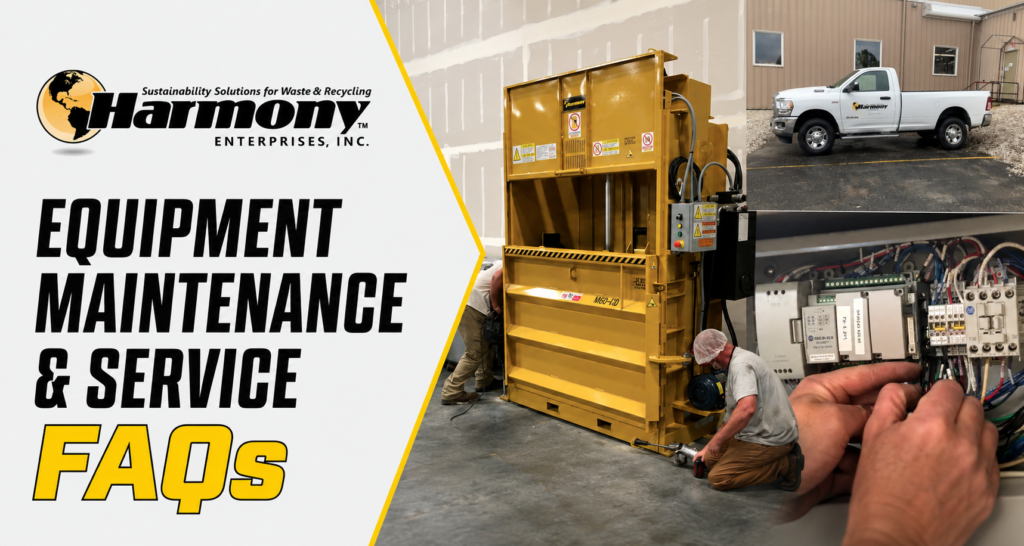 Balers and compactors are long-term operational investments. Like any industrial equipment, they perform best when they are operated correctly, inspected regularly, kept clean, and serviced before minor wear develops into a significant breakdown.
Preventive maintenance helps protect equipment reliability, employee safety, productivity, and total cost of ownership. It can identify loose electrical connections, worn hydraulic hoses, low or contaminated oil, damaged safety devices, misaligned doors, worn guides, and other conditions before they cause extended downtime or costly repairs.
Every machine operates under different conditions. Equipment processing high volumes in hot, cold, wet, dusty, or demanding environments may require more frequent attention than equipment with a lighter duty cycle. The equipment’s current owner’s manual, usage, age, environment, and service history should determine its final maintenance schedule.
The following guidance provides a practical overview of equipment inspection, preventive maintenance, troubleshooting, service, parts, repair planning, and operator responsibilities. Repairs and technical troubleshooting should be performed only by properly trained and qualified personnel using required lockout/tagout procedures.
Why Preventive Maintenance Matters
Preventive maintenance is planned work performed before equipment fails. It combines routine operator observations with scheduled inspections by qualified service professionals.
A consistent maintenance program can help:
- Reduce unexpected equipment downtime
- Identify wear before it becomes a larger repair
- Maintain proper hydraulic and electrical performance
- Protect safety guards, switches, doors, and interlocks
- Extend the useful life of the equipment
- Improve operating consistency
- Reduce emergency service expenses
- Support warranty and service documentation
- Improve parts and labor planning
- Protect the organization’s capital investment
Preventive maintenance does not eliminate every possibility of failure. Components can still wear out or be damaged unexpectedly. It does, however, give facilities a better opportunity to identify deterioration early and address it through planned service.
Building an Effective Maintenance Program
A strong equipment-maintenance program includes daily awareness, routine housekeeping, documented inspections, scheduled professional service, trained operators, accurate manuals, and a plan for responding to downtime.
Operators should know what normal operation looks and sounds like. Changes in cycle time, vibration, hydraulic noise, door movement, bale density, pressure, temperature, or status indicators may provide early signs that the machine needs attention.
Maintenance records should document inspections, repairs, parts, oil changes, electrical readings, recurring problems, and equipment usage. These records help service personnel understand the machine’s history and allow managers to identify trends across one machine or an entire fleet.
Remote monitoring systems such as Harmony Insite™ can add operating data, alerts, cycle counts, runtime, and selected equipment conditions to the maintenance process. Monitoring complements, but does not replace, physical inspection and preventive service.
Understanding Operator Checks & Professional Service
Operators and qualified service professionals have different responsibilities.
Trained operators can keep the surrounding area clean, watch for visible damage, confirm that safety devices appear intact, report unusual operation, and complete approved checks described in the owner’s manual.
Qualified technicians may inspect hydraulic pressure, electrical systems, motor amperage, PLC controls, internal components, wear parts, cylinder condition, switches, relays, valves, pumps, and structural areas requiring technical knowledge or controlled access.
Employees should never remove guards, enter a chamber, bypass an interlock, repair energized equipment, or perform work beyond their training and authorization.
Frequently Asked Questions
Protect the Long-Term Performance of Your Equipment
Harmony offers preventive maintenance, technical support, service coordination, troubleshooting, repair assistance, and replacement parts for balers and compactors.
Whether you manage one machine or an equipment fleet across multiple locations, a documented maintenance program can help reduce downtime, improve safety, extend equipment life, and create more predictable operating costs.